 Story
StoryThese 20-Year-Olds Are Making Millions on Roblox
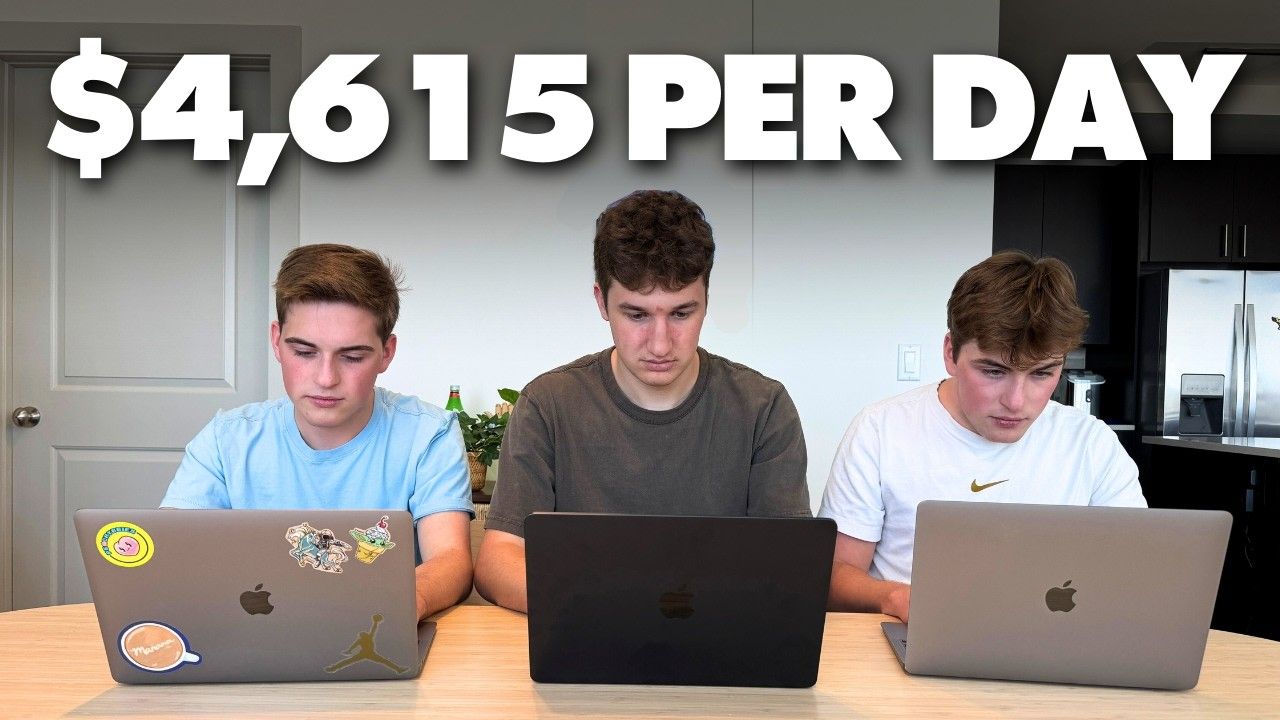
Cole, Ian, and Jake are three young entrepreneurs living in the same Austin apartment and building multi-million dollar businesses on Roblox. Here's exactly how they do it.
I put out a tweet asking if anyone was actually making money from video games. I wasn't expecting much. Then Cole Tucker slid into my DMs claiming he was pulling in serious revenue from Roblox — a platform most people write off as a kids' game. My first reaction was skepticism. So I did what any reasonable person would do: I booked a flight to Austin, Texas, to see it for myself.
What I found wasn't just one guy with a side hustle. It was three best friends — Cole, Ian, and Jake — living in the same apartment and running completely different businesses, all built on the Roblox platform. And the numbers they showed me were very real.
Cole: The Game Developer With 1 Million Daily Players
Cole Tucker is a top 50 Roblox developer in the world. Let that sink in. His main game, Hide or Die, sits in the top 100 games on the entire platform and has over 1 million daily active users — mostly kids in the US and Canada.
Background: Cole started playing Roblox in 2013, when he was eight or nine years old. By sixteen, he was already monetizing games. At eighteen, he made the call to skip college and move to Austin to pursue this full-time. Most people his age were picking majors. Cole was building a business.
The numbers: When Cole pulled up his dashboard, it showed 6 million Robux earned by March 14th — that converts to about $21,000. His game brings in roughly $45k per month, and when you add consulting work, total monthly revenue is around $70k. He splits profits 50/50 with his programmer, covers contractor costs, and takes home somewhere between 30-40% of the top line.
His framework for a successful Roblox game comes down to three things:
- Clickable — the title and thumbnail have to stop a kid mid-scroll. If they don't click, nothing else matters.
- Social — the game has to be fun with friends. Roblox is a social platform first. Games that work in groups spread organically.
- Re-playable — you need a loop that keeps pulling people back. Curiosity, progression, competition — something that makes a player return the next day.
It sounds simple. But Cole also learned the hard way that spending more doesn't guarantee success. He put $300,000 into a game that flopped. Which brings us to his brother.
Ian: The College Dropout Who Went Viral With a Baby-Baking Game
Ian is Cole's twin brother. During winter break from college, he built a game called Bake Da Baby — yes, exactly what it sounds like — in a matter of days. The premise was controversial enough and catchy enough that it exploded.
The viral moment: iShowSpeed and other major YouTubers picked it up. The game racked up around 100 million views across platforms. That wave of attention translated directly into revenue, and Ian had enough money coming in that staying in school stopped making sense. He dropped out and moved to Austin.
The numbers: Ian's game, now iterated into Bathe Da Baby, makes around $25k-$30k per month. He also splits 50/50 with a business partner and pays contractors on top of that. Solid, consistent income — built from a game he prototyped in a single winter break.
The lesson Cole took from Ian: Don't spend years perfecting a grand vision before you know if anyone wants it. Ian built something fast, threw it out there, and it worked. Cole had done the opposite — spent $300k on something polished and comprehensive — and lost. The better approach is to test first, then build. Ship a simple, fun game quickly. See if it gets traction. Then invest more if it does. It's the same lesson every startup founder eventually learns, just applied to game development.
Jake: The Roblox Marketing Agency Running at 60%+ Margins
Jake is their neighbor and friend, and he took a completely different angle. He doesn't make games. He makes money from the brands that want to be inside them.
The business: Jake runs VectorThree, a production agency that helps brands market themselves on Roblox. His team creates game trailers, in-platform video content, and social media campaigns targeted at the Roblox audience. Clients have included Nicki Minaj and SpongeBob. They've produced over 450 videos with more than 100 million combined views.
How he gets clients: About 95% come through LinkedIn. Jake positioned himself as a genuine expert in the Roblox brand marketing space — not just someone pitching services, but someone who clearly understood the platform better than the brands themselves. That credibility does the selling for him.
The numbers: Monthly revenue is around $40k — $25k from retainers, the rest from project work. Costs run about $15k per month, mainly two full-time employees and contractors. That leaves a 60%+ profit margin, which is exceptional for an agency.
Jake's framework for building a company:
- Explore a lot of interests early on
- Get better than average at one of them
- Work as a freelancer first to build real expertise and client relationships
- Then formalize it into a proper business
He also made a point I keep thinking about: the relationships that matter most aren't transactional. The way he, Cole, and Ian connected and ended up in the same apartment, working in adjacent spaces and supporting each other — that wasn't engineered. It was genuine. And that's the kind of network that actually compounds over time.
How the Roblox Economy Actually Works
Jake gave the clearest breakdown of the platform's business model. Think of Roblox as YouTube for video games — anyone can publish content, and if people play it, you earn money.
There are two main revenue streams:
- In-game purchases: Players buy items — power-ups, skins, cosmetics — using Robux, Roblox's in-platform currency. Developers earn Robux, then convert it to real dollars through Roblox's exchange system.
- Brand sponsorships: Companies pay developers to build branded experiences inside popular games. Walmart built "Walmart Land." These aren't banner ads — they're interactive environments where kids spend real time. For brands trying to reach Gen Z and younger, it's one of the most effective channels available.
The scale is hard to overstate. 400 million monthly active users. 50% of kids under 16 in the US play it daily. Players spend twice as much time on Roblox as on TikTok. And the audience is growing up — games like *Dress to Impress* are pulling in older demographics that the platform previously struggled to reach. When MrBeast starts meeting with the Roblox CEO, you know mainstream attention is arriving.
What I Actually Took Away From This
I went to Austin skeptical. I left genuinely impressed — not just by the numbers, but by how clearly these three guys understood what they were building and why it was working.
Cole has a repeatable framework for game development and learned from a $300k failure instead of letting it stop him. Ian validated the "test fast" mindset before most startup accelerators would've finished reviewing his application. Jake built an agency with 60%+ margins by becoming a real expert in a niche no one else was taking seriously yet.
None of them are waiting for permission. None of them are following a conventional path. They're building on a platform that 400 million people use every month, and they got there before everyone else figured out it was a business.
That's the actual opportunity here — not just Roblox specifically, but the pattern. Find a platform people dismiss. Learn it better than anyone. Build before the crowd arrives. These guys are already there.
Original video
https://www.youtube.com/watch?v=8xgnm6SynH4