 Story
StoryShe Built a $1M Mental Health App With No Code
Ania Wysocka had no technical background — just a panic attack, a notebook, and a problem worth solving. Here's the full story behind Rootd's 4 million downloads.
Most successful products start with a personal problem that nobody else seems to be solving well enough. Ania Wysocka's version of that story begins in her fourth year of university, when she had her first panic attack seemingly out of nowhere. She was far from home, without a family doctor, and desperately searching the App Store for something — anything — that could actually help.
What she found was disappointing. Most mental health apps were either too clinical to connect with, or based on hypnosis and techniques that felt completely irrelevant to someone in the middle of a panic spiral. There was a gap. Not just a business gap — a real, human gap. So she grabbed a notebook and started drawing out what she *wished* existed.
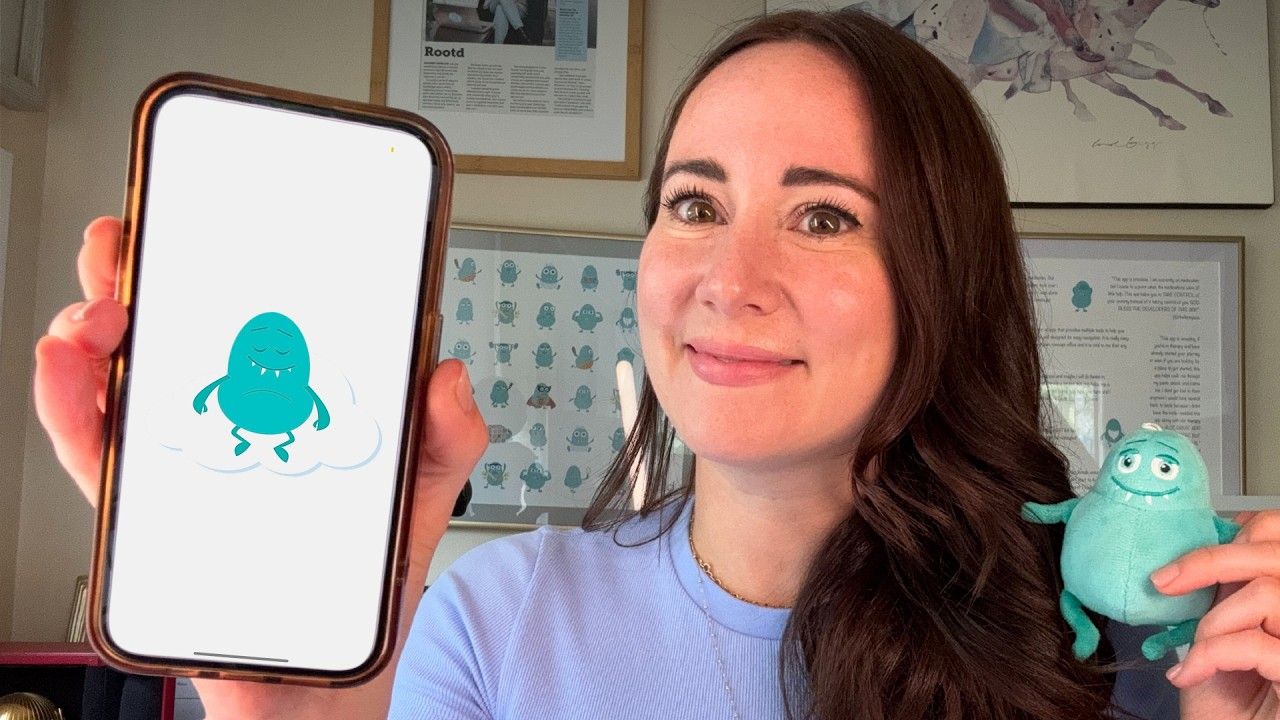
That notebook became Rootd. And since launching in 2019, Rootd has been downloaded over 4 million times and crossed $1 million in annual revenue. All without Ania writing a single line of code.
Step 1: Validate Before You Build
Before Ania wrote a single spec or hired a developer, she did something smart: she read the reviews.
She went through existing mental health apps and analyzed what users were actually saying. The pattern was consistent. People didn't just want mindfulness exercises — they wanted to *understand* what a panic attack was, and they needed something actionable in the moment it was happening. That insight shaped everything.
Ania's two-question validation framework is dead simple:
- Are you genuinely passionate about this problem? Not interested — obsessed?
- Do you believe other people share this problem, and is that confirmed by what you're seeing in reviews, forums, or conversations?
If both answers are yes, she says, build a simple MVP and get it in front of real users as fast as possible. Don't overthink it. Don't wait until it's perfect. The first few hundred users of Rootd encountered bugs and incomplete features — and still told her to keep going. That's the signal you're looking for.
Step 2: Build the MVP Without Being Technical
Here's the part that trips up a lot of aspiring founders who don't have an engineering background: you don't need to code it yourself, but you do need to think through the product deeply before anyone starts building.
Ania started in a notebook, sketching every screen with one guiding question in mind: *What does someone in the middle of a panic attack actually need right now?* That meant keeping things simple, uncluttered, and fast. No overwhelming menus. No walls of text. The design philosophy was baked in from day one.
She then taught herself to build wireframes in Photoshop and Illustrator — not because she loved design software, but because it let her communicate her vision precisely. When she approached an agency, their quote was way out of her budget. So she partnered with a student developer instead. The key insight: because all the content and wireframes were already done, the actual development only took a few months. The prep work *was* the work.
The first version of Rootd shipped with three core features: a panic attack button, a breathing tool, and educational lessons on understanding anxiety. That's it. Clean, focused, and genuinely useful.
Step 3: Grow Slowly, Then Quickly
Rootd's growth curve looks like what most real businesses actually look like — gradual at first, then compounding.
- Year 1: ~10,000 downloads
- Year 2: 100,000 downloads
- Year 3: 1 million downloads
Ania ran this as a side project for the first two and a half to three years while holding down a full-time job. She only went all-in on Rootd when two things aligned: her day job stopped being fulfilling, and the app's revenue could comfortably cover her life. That's a sensible threshold. Not a leap of faith — a calculated transition.
This kind of timeline matters because it reframes what 'success' looks like in the early days. You're not failing if you have 500 users in month three. You're building.
Step 4: The 4-Part Playbook That Actually Drives Growth
Once Rootd had product-market fit, Ania developed a repeatable system for growth. It's four steps, and they all work together.
1. Build a product that actually delivers. This sounds obvious, but it's the foundation of everything. If your app doesn't do what it promises, no amount of marketing saves you. When it *does* deliver, users talk about it. Word-of-mouth in the mental health space is powerful — people share tools that helped them with the people they care about. That organic loop is what drove millions of downloads without a paid ads budget.
2. Listen to user feedback obsessively. Ania's philosophy here is unambiguous: "Listen to users very closely. They will have the answers you need." User reviews aren't just reputation management — they're a product roadmap. They tell you what's confusing, what's missing, what's resonating. If you're reading your reviews and just responding to complaints, you're missing most of the value. Read them like a researcher.
3. App Store Optimization (ASO) as an ongoing discipline. This is the channel most indie app founders under-invest in. Ania ships updates once a week — not because there's always a major feature to release, but because frequent updates signal to the App Store algorithm that the app is actively maintained. She also keeps the app's name, description, and keyword fields tightly aligned with what users are actually searching for, and she treats user reviews as part of that SEO ecosystem. It's a feedback loop: better reviews improve ranking, better ranking brings in more users, more users leave more reviews.
4. Strategic partnerships to expand reach. Rather than chasing influencers or running ads, Ania focused on building relationships with wellness organizations, therapy practices, and psychologists. These are people who have direct trust with the exact users Rootd is trying to reach. A recommendation from a therapist carries infinitely more weight than a sponsored post. These partnerships don't happen overnight, but they compound over time in the same way good press does.
What Founders Get Wrong About Sustainability
The final section of Ania's advice cuts to something most startup content ignores entirely: the founder's own mental health.
It's a bit ironic — she built a panic attack app and still had to remind herself to take care. But that's the point. Building something meaningful is intense. The highs are high, but the uncertainty is constant, and if you're pouring everything into a product without refueling yourself, you burn out before you ever see the compounding returns.
Her advice: celebrate the small milestones. The first hundred downloads. The first user email that says your app helped them through a scary moment. Those moments are the whole thing — not the revenue numbers, not the press mentions. The impact is the point.
Takeaways
Ania's story is a clean proof of concept for what's possible when you start from a real problem rather than a business plan. She didn't need a CS degree or venture funding. She needed a clear problem, user empathy baked into every decision, and enough patience to let compounding do its thing.
If you're sitting on an idea right now — especially one that came from your own frustration with existing tools — the Rootd playbook is worth internalizing. Validate through competitor reviews. Build the simplest possible version. Get it in front of real users. Then optimize, listen, and partner your way to scale.
The notebook is the first step. Everything else follows.
Original video
https://www.youtube.com/watch?v=VfNRd5Rk0cM