 Story
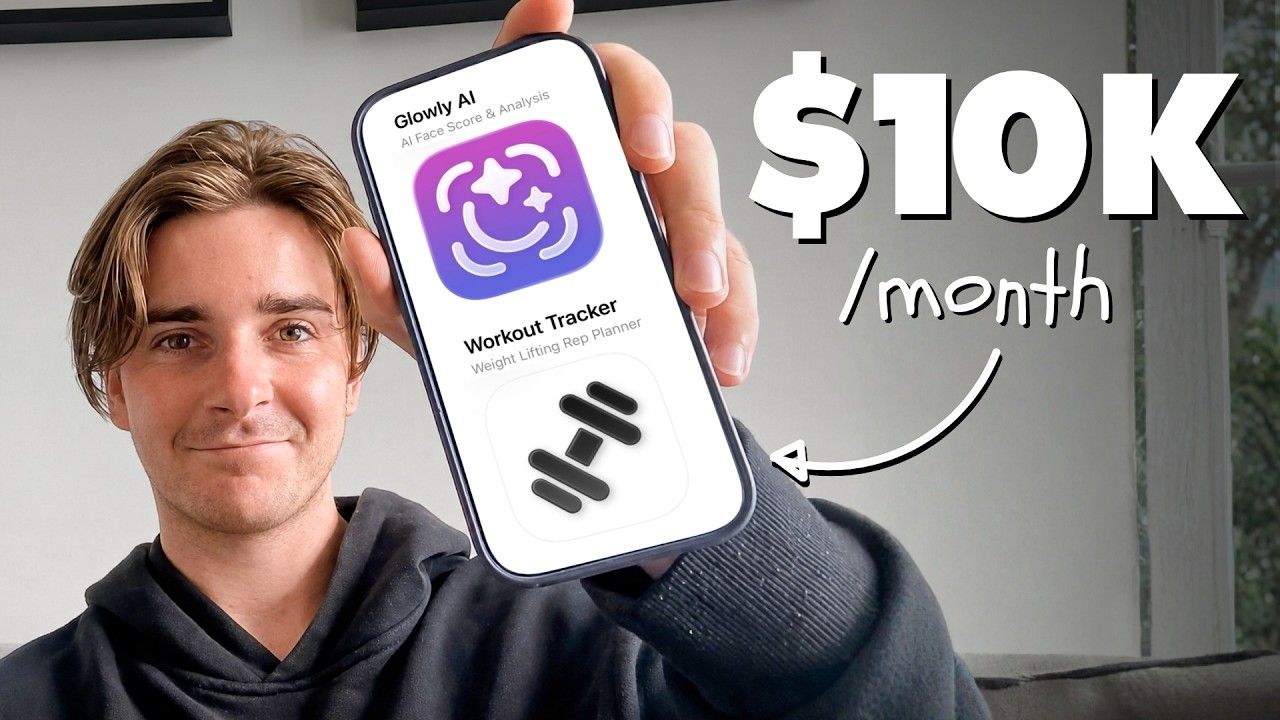
StoryHow Will Baker Built 2 Apps to $10K/Month the Lazy Way
Will Baker didn't grind his way to $10K/month — he optimized for minimum effort and maximum income. Here's the exact playbook he used.
Most hustle culture advice tells you to work harder, post more, reach out manually, and grind until something sticks. Will Baker took the opposite approach. He calls it the Lazy Method — or "Lazy Maxxing" — and it's generated over $10,000 in monthly recurring revenue across two iOS apps with minimal day-to-day involvement. His stated goal is simple: "maximize the amount of money I can make while minimizing the amount of effort required." It sounds like something people say right before they pitch you a course. But Will's revenue dashboard backs it up.
The Two Apps
Will built two iOS apps, both sitting in trending consumer niches:
- Overlo — a fitness app focused on muscle building that includes an AI body scan feature. Currently generating around $780/month in almost entirely passive income.
- Glowly AI — a "lookmaxxing" app where users scan their face and receive personalized tips on improving their facial appearance. This one is the real engine, pulling in approximately $10,734/month.
Neither of these is a wildly original idea. That's intentional. Will's whole approach is built around identifying what's already working, not inventing something from scratch.
Will's Background
Will started experimenting with online businesses at 16 — dropshipping, selling social media likes, the usual early-internet-money rabbit holes. After university he went deeper into crypto startups and NFTs, which taught him a lot about hype cycles and what catches people's attention. Eventually he landed on freelance web design as a reliable income source, which gave him both the capital and the design sensibility to start testing app ideas seriously. That background in design turned out to be a quiet superpower — it meant he could look at an existing app, spot what it was missing visually or functionally, and build something cleaner.
The apps didn't come from a moment of genius. They came from rapid testing with money he'd already earned doing something stable. That sequence matters more than people realize.
Step 1: Find Ideas by Scrolling
Will's idea-finding process is genuinely low-effort: he scrolls Instagram and TikTok. That's it. His reasoning is that social platforms are massive, real-time data sets showing exactly what people want, what they're anxious about, and what they find aspirational. If something is going viral, that's a signal — both for the app concept itself and for the kind of content that will market it effectively.
He doesn't look for unsolved problems in obscure markets. He looks for existing trends with existing audiences and asks: *can I build something better, simpler, or more visually compelling than what's already out there?* Lookmaxxing content was already everywhere on TikTok. Fitness transformation content has never gone away. Both Glowly and Overlo ride waves that were already moving.
Step 2: Validate with a Viral Feature
This is the filter that determines whether Will actually builds something. His rule: he won't work on an app unless it has a clear viral feature that explains itself in essentially one screenshot.
The app has to sell a transformation. Not a feature set, not a subscription with ten benefits — a single, tangible, emotionally compelling promise. "Scan your face, improve your looks." "Scan your body, build muscle." These are concepts you can explain in a TikTok thumbnail. They're shareable because they're specific and the outcome is something people genuinely want.
This constraint does a lot of heavy lifting. It forces the idea to be simple enough to market cheaply, which is critical when your whole strategy depends on paid ads working efficiently. If you can't explain the transformation in one image, the ad costs go up and conversions go down.
Step 3: Build the Funnel — Especially the Onboarding
Will's app funnel has two parts: the ad creative and the in-app experience. Most people obsess over the ad and phone it in on the product side. Will does both intentionally.
The in-app experience is built around a long onboarding process — typically 12 to 15 steps. This isn't padding. It's psychology. Each question the app asks pulls the user deeper in. By the time they reach the paywall, they've already invested time, answered personal questions, and the app can present them with something that feels customized — a personalized plan, a specific insight, a result tailored to their inputs. At that moment, the user feels like the app was built for them. Conversion rates climb because people don't want to abandon something that already feels personal.
This is the kind of detail that separates apps doing $780/month from apps doing $10,000+. The paywall isn't just a gate — it's the end of an onboarding journey that's been specifically designed to make leaving feel like a loss.
The Core of It All: Paid Ads
Will is direct about what makes the whole system lazy in the best possible sense: paid advertising. He tried User-Generated Content (UGC) and influencer marketing early on. Both were difficult to manage, hard to track, and required constant coordination with people. Paid ads, by contrast, let him create a handful of winning creatives, launch them, and essentially leave them running.
His words: *"The thing I like about ads is that I can just make a few winning ads, throw them out, and basically live on them for the next four or five months."*
TikTok is his primary platform for this. The key to making TikTok ads work, he says, is making them feel native — meaning they look and feel like organic TikTok content, not ads. Meme formats, trending audio, natural pacing. And critically: don't mention the app in the first few seconds. Hook the viewer first with something relatable or funny, then introduce what the app does. The moment an ad looks like an ad, people scroll past it.
Once you have creatives that convert, the system basically runs itself. That's the leverage point. You're not constantly creating content or managing influencer relationships. You're optimizing a small number of ads that already work.
The Long Game: Build a Personal Brand
This is the part of Will's advice that goes beyond the immediate tactics. He's a firm believer in documenting your journey publicly — specifically on Twitter/X — as you build. Not because it drives direct app downloads, but because a personal brand is the one thing AI cannot replicate.
If you're sharing your wins, your failures, your revenue milestones, and your lessons in public, you're building an audience that trusts you as a person. That trust compounds. It creates distribution for your next product, attracts collaborators, and opens doors that cold outreach never will. It's also genuinely differentiated in a market where AI-generated content is increasingly indistinguishable from the real thing. *You* — your specific story, your specific journey — is the moat.
Will points to Starter Story as a model of this kind of authentic, journey-based content. The pattern isn't complicated: share what you're doing, share the numbers when you have them, be honest about what's working and what isn't. The audience builds slowly and then it doesn't.
What the Lazy Method Actually Teaches
The real insight here isn't that entrepreneurship should be easy. It's that most of the effort people put into building apps goes into things that don't scale — manual outreach, organic content treadmills, influencer wrangling. Will strips all of that out and replaces it with systems: paid ads that run on their own, onboarding flows that convert on their own, app concepts with built-in virality.
He spent years experimenting — dropshipping, crypto, NFTs, freelance design — before landing on something that worked. The "lazy" part is what he optimized *after* he found the right vehicle. The finding still required iteration and investment.
But once you have a validated app with a viral hook, a tight onboarding funnel, and a few winning TikTok creatives? That's a machine you can actually step away from. And $10,000 a month from something you barely touch is a very different kind of freedom than grinding toward a number that keeps moving.
Original video
https://www.youtube.com/watch?v=zrsGDDLP7WM