 Story
StoryHow This Guy Makes $1M/Year Selling Trout
Ty Walker had zero fish farming experience and still turned an abandoned 1930s hatchery into a million-dollar business serving Michelin-star restaurants. Here's how he did it.
Some businesses start with an MBA, a pitch deck, and a round of funding. Ty Walker's started with a God moment, an abandoned hatchery, and a willingness to kill a lot of fish before figuring out how to keep them alive.
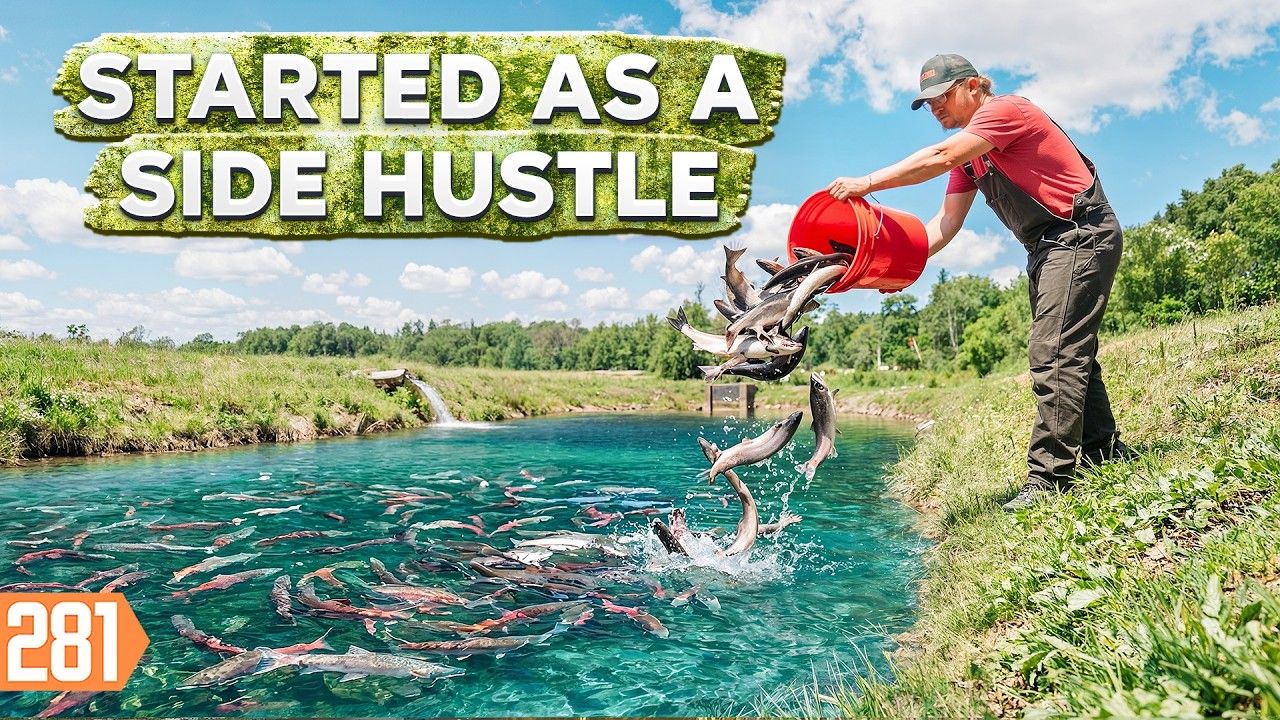
Ty runs Smoke in Chimneys, a trout farm tucked into Newcastle, Southwest Virginia, on the edge of a national forest. He makes over a million dollars a year selling trout to Michelin-star restaurants across the country. He built the whole thing with zero debt, zero ad spend, and — at the very beginning — zero experience with fish farming. Before this, he and his wife were running a raw milk herd share and raising pastured pork. Not exactly a direct path to becoming one of the most sought-after trout suppliers in the country.
But that's kind of the point.
The Property That Started It All
When Ty discovered the abandoned 1930s hatchery, he called it a "God moment." The 4-acre property had been built by the U.S. Department of the Interior as a research facility, and it sat dormant for years before Ty saw what it could become. What made the property genuinely special — irreplaceable, even — was a 3,000-gallon-per-minute limestone spring running through it. That spring feeds the raceways and the earthen ponds at a constant 52 degrees year-round. Ty calls it "the magic that makes this whole place run," and he's not being poetic. The clean, cold, mineral-rich water is the single biggest contributor to why his trout taste the way they do. You can't manufacture that. You can't scale it by buying a bigger building. It's the kind of unfair advantage that only exists in the physical world.
The farm now holds between 50,000 and 100,000 trout at any given time, spanning every stage of development from eggs to harvest-ready fish. The hatchery building — the original 1930s structure — is still the starting point for every single fish on the property.
The Trout Lifecycle, Start to Finish
The process begins inside the hatchery with eggs placed into hatching jars. The spring water flows through these jars at that constant 52 degrees, keeping the eggs oxygenated and gently tumbling — mimicking the conditions of a natural stream. When the eggs hatch, the tiny fish (called fry) move into troughs inside the hatchery building and start eating. Ty feeds them a high-protein diet, which has traditionally included things like freeze-dried beef liver — 40% protein and packed with trace minerals that support healthy development. It sounds unusual, but the logic is straightforward: raise the fish as close to their natural nutritional baseline as possible.
After about a month in the troughs, the fry move to five outdoor concrete raceways. They stay there until they're a couple of inches long, developing strength in the flowing water. Then comes the final stage — seven earthen ponds where the trout will spend the rest of their lives. From pond to plate, it's roughly a two-year process. That's two years of spring water, careful feeding, and time. There's no shortcut. And that timeline is a big part of why the product commands the prices it does.
Three Years Before the Business Was Real
Ty is honest about how long it actually took to get going. Year one was spent cleaning the property. The hatchery had been abandoned, and getting it operational was a full year of physical work before a single fish was raised commercially. Year two was learning — and failing. He describes killing fish faster than he could raise them in the early days, which is a brutal and expensive way to learn, but he kept iterating. Year three was getting state approval for processing, which is its own maze of paperwork and inspections.
Most people would have quit somewhere in year one. Ty's advice for anyone building something from scratch is to take "messy action" — don't wait until everything is figured out, because it never will be. Every wall you hit is just part of the maze. You don't avoid the maze; you navigate it. The entrepreneurs who make it aren't the ones who never hit walls. They're the ones who keep moving when they do.
He also points to one of his earlier pricing mistakes as a critical turning point. Like a lot of first-time producers selling into a premium market, he initially underpriced the product. When you don't fully understand your cost of production — two years of water, feed, labor, and infrastructure per fish — it's easy to leave money on the table. Raising prices to actually reflect the value of what he was producing wasn't just good business; it was necessary for survival.
Zero Debt. Zero Ads. Word of Mouth.
Here's the part of the story that stands out most to me. Smoke in Chimneys built its restaurant client list — Michelin-star restaurants, nationally — without spending a dollar on advertising. The growth came from organic content and word of mouth inside a very specific community: the world of high-end chefs.
Chefs talk to each other. When one kitchen finds a supplier producing something genuinely exceptional, the word spreads. That's a distribution channel that money can't buy directly. You earn it by being the best product in the room. Ty built the reputation by focusing obsessively on quality — the spring water, the feed, the two-year grow-out — and then let the product do the selling.
The business also carries zero debt. In an industry where most farms are financing equipment and infrastructure constantly, that's a meaningful structural advantage. It gives Ty control over decisions in a way that highly leveraged businesses simply don't have. He can absorb a bad season. He can raise prices. He can say no to buyers who don't align with what he's building.
The farm does offer some direct-to-consumer retail boxes alongside the restaurant accounts, which adds a second revenue channel without dramatically complicating operations. But the core of the business is those high-end restaurant relationships, and those relationships are built on product quality and trust — not marketing spend.
What This Story Is Actually About
On the surface, this is a story about trout. But what Ty actually built is a masterclass in identifying a genuine, durable advantage — that limestone spring — and then doing the slow, unglamorous work required to turn it into a business. No shortcuts. No outside capital. No experience at the start.
He found an abandoned asset that most people walked past. He moved his family to Southwest Virginia. He spent three years learning before the business was generating real revenue. He killed a lot of fish. He raised his prices when it was uncomfortable. He let quality be the marketing.
The result is a million-dollar-a-year farm that supplies some of the best restaurants in the country, built entirely on a foundation of patience, persistence, and spring water.
If you've been waiting for a business idea that requires some secret formula or a massive starting advantage — Ty's story is a reminder that the real formula is simpler and harder than that. Find something real. Learn it deeply. Don't quit when it's messy. And build something worth talking about.
The rest tends to follow.
Original video
https://www.youtube.com/watch?v=L8kpGiVuwz4