 Story
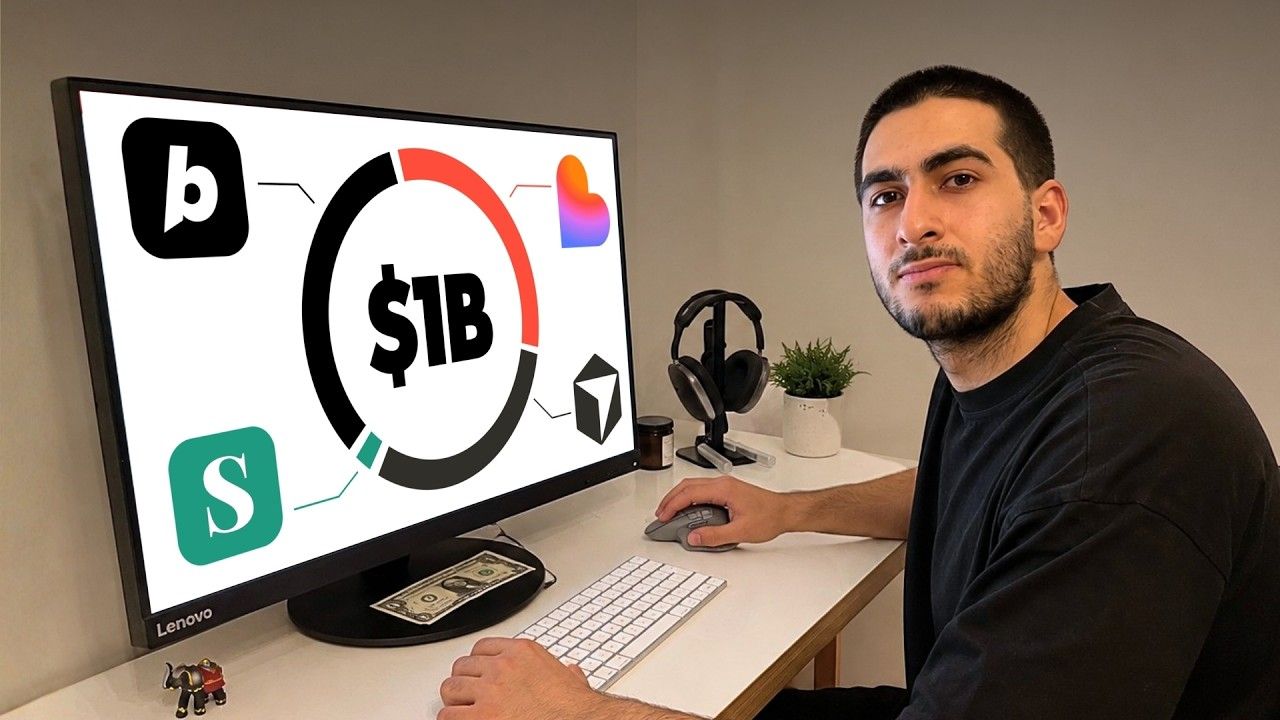
StoryHow They Cloned a $1B Company and Hit $50K/Month
David and his brother Daniel bootstrapped Shipper, an AI app builder, to $50K/month — with no VC money, no technical background, and no original idea.
Most people get stuck waiting for a completely original idea. David and his brother Daniel didn't wait. They looked at a booming market, found what frustrated users the most, and built a focused, smaller version of what already existed. The result? Shipper, an AI app builder, now pulling in $50,000 a month — bootstrapped from zero.
Here's exactly how they did it.
Step 1: Find a Proven Market, Not a New Idea
Principle: You don't need to reinvent the wheel. If a large market exists and billion-dollar companies are thriving in it, that's validation — not a reason to stay away.
Example: In the summer of 2025, David and Daniel spotted the explosive rise of the no-code and AI app builder space. Base44 hit $3 million ARR in six months. Lovable hit $1 million ARR in a single week. The market was clearly on fire.
How to apply: Their logic was simple — capturing just 1% of a massive market would be life-changing. You don't need to own the whole space. Find a booming niche, identify the big players, and ask yourself what slice you could realistically own.
Step 2: Find One Pain Point and Triple Down on It
Principle: Don't try to build everything. Find the single most common complaint users have with existing tools and make that your entire product focus.
Example: David and Daniel dug into Trustpilot reviews, public roadmaps, and Discord communities for their competitors. They noticed that platforms like Lovable were heavily focused on websites and web apps, leaving a gap for anyone wanting to build mobile apps, Chrome extensions, or bots for Telegram and Discord.
How to apply: Go where your competitors' customers are complaining. Trustpilot, Reddit threads, Discord servers, community forums — these are goldmines. Look for patterns. When you see the same frustration come up over and over, that's your product brief.
Step 3: You Don't Need to Be Technical
Principle: Non-technical founders can build successful tech companies by mastering marketing and hiring the right development talent.
Example: David and his brother started building SaaS products back in 2019, having no interest in learning to code. Instead, they went deep on marketing. Their first major success was Legit Check By Ch, a luxury goods authentication service (featured on Starter Story), which funded all their future ventures. Shipper was built with just one developer to start.
How to apply: If you don't code, don't force it. Double down on what you're already good at — customer research, distribution, positioning — and hire for what you're not. The "ship fast" methodology works regardless of whether you're writing the code yourself.
Step 4: Grow Organically Before Spending a Dollar on Ads
Principle: There's a clear sequence to organic growth for SaaS. Follow it before touching paid advertising.
Shipper's growth ladder:
- Product Hunt — generated their very first $50 in MRR
- Reddit — scaled them to $1,000 MRR
- High-intent SEO — articles targeting keywords like "alternatives to [competitor name]" brought in consistent traffic from people already ready to switch
- Building in public on X (Twitter) — this is where growth went parabolic, adding roughly $20,000 in MRR within just a couple of weeks
How to apply: Don't skip the early channels because they feel slow. Each one builds credibility and compound traffic. And building in public isn't just content — it's social proof happening in real time.
Step 5: Go Paid-Only From Day One
Principle: A free tier sounds like a growth hack, but it often means you're subsidizing users who will never pay — while your paying customers get a worse experience.
Example: Shipper has approximately 690 paid users and zero free users, deliberately. Every dollar coming in goes straight back into product development for the people actually paying.
How to apply: If you're pre-revenue, the instinct is to offer a free plan to get sign-ups. Resist it. A paid-only model forces you to deliver real value fast, gives you revenue to reinvest immediately, and keeps your focus on customers who have real skin in the game. Shipper's cheapest plan starts at $25/month, credit-based, with additional top-ups for cloud and builder credits available as one-off purchases.
Takeaways
David's final advice is worth repeating: build in a niche you genuinely understand, find a big market, and create a version tailored specifically for people like you. Shipper's current MRR sits at $25,605 with an ARR of $307,260 — not bad for a "copycat" strategy.
The idea doesn't have to be original. The execution does.
Original video
https://www.youtube.com/watch?v=Nnpz1wsTjBI