 Story
StoryHow Pigment Built a $100M ARR Platform by Taking the Hard Route
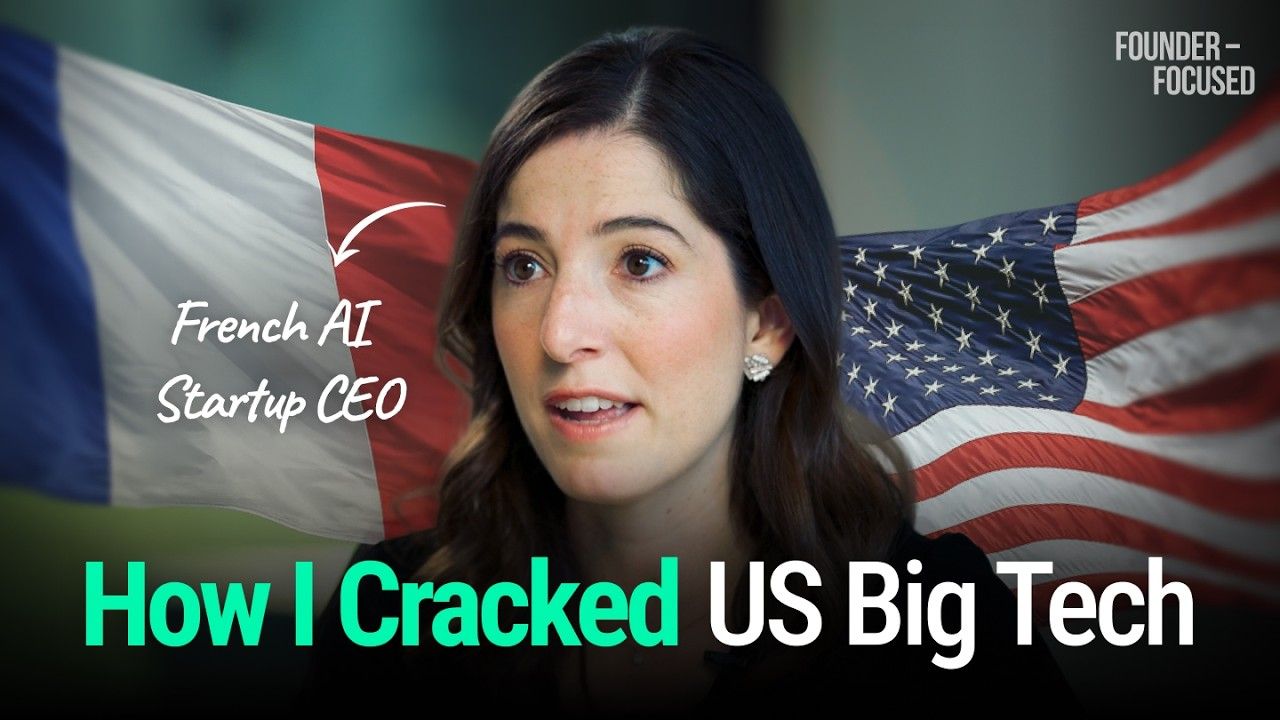
Eléonore Crespo saw Google running global financial planning on spreadsheets and knew the market was broken. Here's how Pigment competed with SAP and Oracle — and won.
Most founders look for the path of least resistance. Build something small, get traction, layer on complexity later. Eléonore Crespo, co-founder and co-CEO of Pigment, did the opposite — and it worked.
Pigment is an AI performance management platform that centralizes a company's financial, sales, HR, and supply chain data into a single place, replacing the cobbled-together spreadsheet messes that most enterprises still rely on. Since launching, Pigment has raised over $400 million and is approaching $100 million in annual recurring revenue on a 2x ARR growth trajectory. It competes directly with legacy giants like SAP and Oracle. That's not an accident. It was the strategy from day one.
Eléonore's story of building Pigment is one of the clearest examples I've seen of how deliberately choosing the hard path can ultimately become the fastest one.
Step 1: See the Problem That Everyone Else Is Ignoring
Eléonore's insight came from an unlikely place: the CFO offices of Google EMEA and Alphabet. She went in expecting to see the most sophisticated financial tooling in the world. What she found was Google Spreadsheets — running revenue forecasts, margin analysis, budgeting, and strategic planning for one of the most complex businesses on earth.
She was shocked. Here was a company that had built some of the most transformative technology products in history, and yet internally they were stitching together global financial plans across dozens of countries and multiple business lines in spreadsheets. The tool simply wasn't built for that scale. Data broke, models became unwieldy, and the people responsible for steering billion-dollar decisions were working around the tool rather than with it.
The realization she drew from that experience was simple but powerful: if Google has this problem, thousands of other companies do too. Spreadsheets like Excel are genuinely great for small, flexible models. But they fall apart when you try to scale them to the complexity of a global enterprise. That gap — between what companies needed and what existed — was the market.
She tested this hypothesis further after Google, when she joined Index Ventures and worked alongside founders from Figma, Datadog, and Revolut. These were early adopters of cutting-edge technology. Companies doing everything right on the product side. And yet every single one of them was struggling with the same fundamental business planning challenges — preparing for IPOs, trying to optimize sales territories, trying to actually understand their own revenue, and still not being able to do it efficiently. The problem was universal, and it was painful.
Step 2: Take the Hard Path, Because It's Actually the Fast One
Once she identified the problem, Eléonore had a choice in how to attack it. Most startups entering a market dominated by SAP and Oracle would sensibly find a wedge — one narrow feature, one specific use case — and try to win a small corner before expanding. That's the conventional playbook.
Pigment rejected it.
The core bet: Build a complete, enterprise-ready, end-to-end platform from the very beginning. Not a feature. Not a nice-to-have workflow improvement. A genuine must-have — a product so comprehensive and capable that it could replace the legacy solutions entirely rather than sitting alongside them.
Why this is hard: Building across the full stack — from the computation engine that handles enormous datasets, to the user experience that finance and RevOps teams actually want to use, to the AI agents that generate forecasts and executive summaries — takes years before you can even go to market. Pigment started product development in late 2019 and wasn't ready to sell until 2021. That's a long runway of building with no revenue validation.
Why it pays off: Eléonore frames it beautifully — "taking the hard route can bring you to an easier route over time." By the time Pigment arrived in the market, it wasn't competing on one small feature. It was competing on everything. Customers didn't have to evaluate whether Pigment could grow with them. It was already built to enterprise scale. That changes the sales conversation entirely.
The alternative — a nice-to-have product — is actually the riskier path. You win some small deals, but you never become essential. Enterprise buyers don't switch vendors for nice-to-haves. They switch for must-haves. And building a must-have means doing the hard architectural work upfront.
Step 3: Build Trust Before You Have Brand
Getting your first enterprise customers when you're a Paris-based startup with no brand recognition in the US is genuinely brutal. Eléonore doesn't sugarcoat this.
Pigment's answer was to be incredibly strategic about who their first customers were. They went after forward-thinking companies — not the biggest names, but the most credible ones in their space. Figma, Brex, and Carta all became early customers. The CFO of Carta was so impressed with what he saw that he became an angel investor.
Why this mattered: In enterprise sales, reference customers are everything. If a CFO at a fast-growing company says "we use Pigment and it transformed how we plan," that carries more weight than any marketing campaign. These early adopters didn't just generate revenue — they generated credibility. And credibility, in enterprise, is currency.
Beyond customer selection, Pigment was deliberate about their investors too. Rather than optimizing purely for valuation, they chose investors who could connect them to large enterprises and help recruit key US-based executives. The network was treated as a strategic asset, not just a source of capital.
This combination — influential early customers, strategically networked investors, and a product that could genuinely deliver — created a growth flywheel. The credible early adopters opened doors to the next tier of customers. Those customers opened the next. Over time, the compound effect of that early groundwork became their most durable competitive advantage.
Step 4: Your Team Is the Product (Especially Before You Have One)
Here's the part that most fundraising advice misses. Before Pigment had a product to show, they raised approximately $25 million. How?
The team was the deck.
Eléonore is direct about this: for pre-launch fundraising, investors aren't buying your product because there isn't one yet. They're buying the team's ability to build and sell something that matters. The credibility of the founding team — their domain expertise, their networks, their demonstrated ability to understand the problem — is the primary signal investors are evaluating.
Pigment leaned into this hard. They built one of the best engineering teams they could find. But they also made a deliberate choice to hire former finance analysts and RevOps professionals — the exact personas they were building for. When a Pigment team member walks into a sales meeting with a CFO and can speak their language, reference the specific workflows they struggle with, and demonstrate genuine empathy for the problem, it's different. The customer doesn't feel like they're being sold to. They feel understood.
That's a moat that's very hard to replicate quickly.
Eléonore also shares practical hiring wisdom: be radically transparent about the job's challenges during the interview process. Don't oversell the opportunity. The right candidates will be energized by honesty, not put off. And always do thorough background checks — including speaking with references who weren't listed by the candidate. The conversations you have with unlisted references tell you far more than the curated list ever will.
Conclusion
Pigment's story is a case study in conviction. Conviction that the problem was real and massive. Conviction that the right solution required doing the hard architectural work before chasing early revenue. Conviction that trust — built through a credible team, strategic early customers, and genuine domain expertise — was the only durable way to compete with giants.
Most startups look at SAP and Oracle and find a niche to hide in. Pigment looked at them and decided to compete head-on, with a better product, built from the ground up, by a team that intimately understood what customers actually needed.
The compound effect of that approach took time to kick in. But once it did, it became nearly impossible to replicate.
Sometimes the hard path really is the fast one. You just have to be willing to walk it.
Original video
https://www.youtube.com/watch?v=5ehxutchdXU