 Story
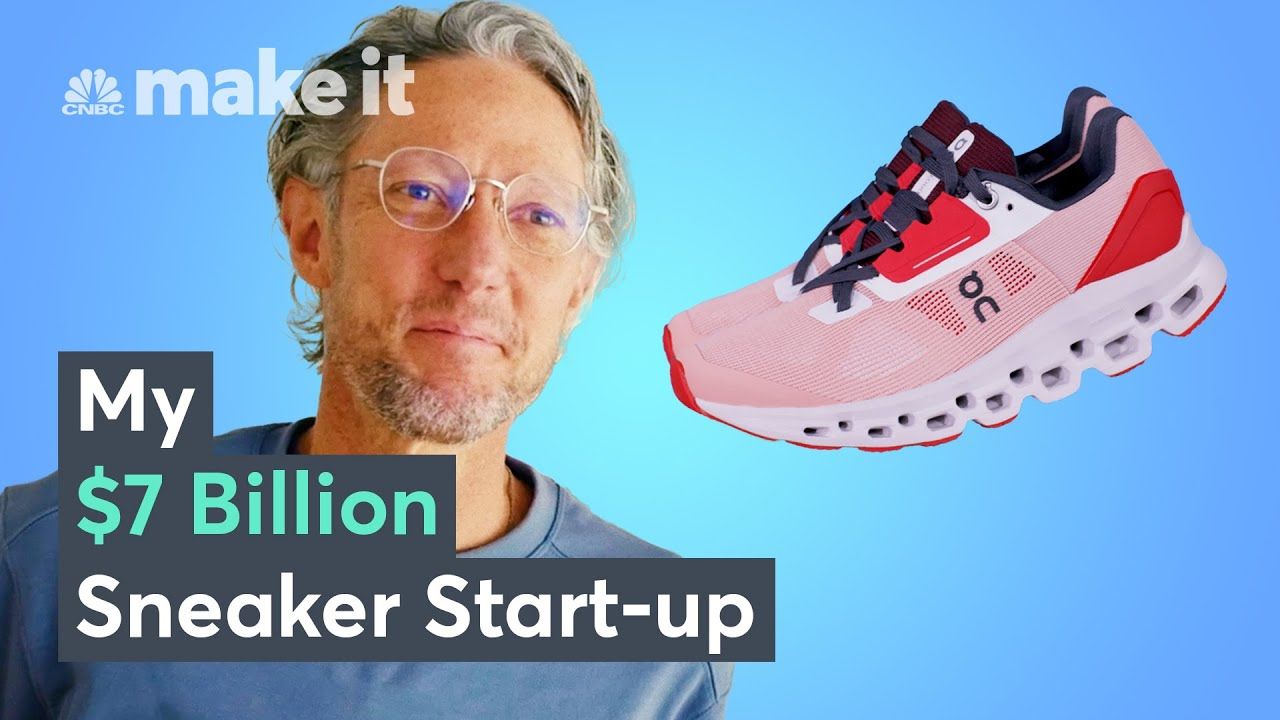
StoryHow On Running Grew from Garden Hoses to $7 Billion
A retired triathlete, a weird prototype, and one legendary tennis player. Here's the full story of how On Running became a global powerhouse.
Most great companies start with a story that sounds almost too strange to be true. On Running's origin is exactly that: a retired Swiss triathlete staring at a battered old Nike Pegasus with pieces of rubber garden hose glued to the sole, thinking — wait, this might actually work.
That triathlete was Olivier Bernhard. Six-time Ironman champion, two-time world champion, and not exactly the kind of guy you'd expect to build a $7 billion footwear brand. But that's exactly what happened. In just over a decade, On went from 10,000 pairs and roughly $100,000 in first-year revenue to a $746 million IPO valued at $7.3 billion. The story is a masterclass in what happens when a world-class problem solver teams up with the right people at the right time.
The Man Behind the Shoes
Bernhard grew up on a family farm in the Swiss countryside, close to the poverty line. That upbringing gave him something you can't manufacture: a deep, almost instinctive understanding of hard work and endurance. In the early 1980s he fell hard for triathlon — the combination of swimming, cycling, and running fit perfectly with who he was. He wasn't the fastest pure swimmer. He wasn't the most powerful cyclist. But he could endure physical punishment better than almost anyone on the planet, and that edge carried him across finish lines others couldn't reach.
Making a living as a triathlete in the 1980s and 90s was nothing like the professional sports world of today. Bernhard often had to win prize money just to afford the flight to his next race. His first real payout was $1,500 from winning a marathon in Tucson, Arizona at age 21 — and after paying his brother back for the entry fee, he netted $1,000. That $1,000 is the number that sticks. It's the first data point in a financial arc that eventually reaches nine figures.
At the height of his athletic career, Bernhard was earning about $150,000 a year. Two world championships and six Ironman titles later, he was 35 and could feel the end coming. In 2006, at 37, he ran his last professional race. He launched a coaching company afterward, but the entrepreneurial itch — specifically around running technology — never went away.
His advice to anyone navigating a major transition, whether athlete or entrepreneur: take it step by step. Don't stare at the summit and get paralyzed. Enjoy the level you're at. That mindset, patient and process-driven, would define everything On became.
The Garden Hose Prototype
The product idea arrived when an engineer friend from Zurich showed up with a prototype that looked, frankly, ridiculous. He'd taken an old Nike Pegasus and attached sections of rubber hose to the sole. Bernhard's first reaction was that it was ugly. His second reaction, after he actually ran in it, was that it felt like nothing he'd ever experienced.
The sensation came down to a specific mechanical insight. Traditional running shoes cushion vertical impact — they absorb the downward force as your foot hits the ground. The rubber hose sections in this prototype did something different. They didn't just pad the vertical movement; they also assisted with horizontal movement, creating a soft landing that transitioned into a firm, propulsive push-off. As a competitive athlete who had spent his entire career obsessing over running efficiency, Bernhard immediately understood what he was feeling. This wasn't a gimmick. It was a genuinely different experience that could help runners perform better and hurt less.
That technology would eventually become what On calls CloudTec — the distinctive hollow pod system on the sole of every On shoe. But in 2006, it was still just a weird-looking rubber hose attached to a beat-up Nike.
Building the Right Team
One of the smartest things Bernhard ever did was recognize what he didn't know. He was a world-class athlete with a product instinct. He was not a numbers guy. He was not a designer. He was not a marketer. And instead of trying to fake it, he went out and found the people who were.
He called Caspar Coppetti, his former sports agent, who brought in a friend named David Allemann. Both Coppetti and Allemann had sharpened their business skills at McKinsey. The trio launched On in 2010 from an office in Zurich. Critically, each partner invested the same amount of money to get started. Bernhard later pointed to that equal investment as the right foundation — everyone had real skin in the game, no one held leverage over anyone else, and that created a genuine sense of shared urgency to make it work fast.
Within six months, they had gone from concept to working prototype. Their first production order was 10,000 pairs of shoes. The early versions weren't perfect — they squeaked, and they weren't winning any design awards. But they worked, and they felt like nothing else on the market.
Selling the Experience, Not the Product
Here's where On's early strategy gets interesting. Walking into a sporting goods retailer and trying to explain CloudTec technology with a PowerPoint presentation was never going to work. A shoe that looks like it has garden hoses on the bottom needs to be felt, not described.
So instead of traditional sales pitches, the On team started inviting retailers to go running with them. That's it. Put on the shoes, go for a run, come back and talk. Once a retailer had actually experienced the sensation — that soft landing snapping into a propulsive push-off — they stopped being skeptical and started asking questions. It flipped the entire sales dynamic. They weren't pushing a product anymore; they were sharing a discovery. That shift made everything easier.
In their first year, On generated about $100,000 in revenue. Not massive, but enough proof that the approach was working.
The ISPO Moment and a Silver Medal in Rio
The brand's first major public breakthrough came in 2013 at ISPO, the largest sports gear trade show in Europe. On entered their Cloudracer prototype into a competition alongside more than 300 competitors and won the Gold Award. For a tiny three-year-old company from Zurich going up against established players, that win was transformative.
They had originally planned to launch in just three countries — Switzerland, Germany, and Austria. After ISPO, they walked away with deals in 19 countries. One competition, one award, and their distribution footprint grew more than sixfold almost overnight.
Momentum kept building. When Swiss triathlete Nicola Spirig won a silver medal at the 2016 Rio Olympics wearing On shoes, it put the brand on a genuinely global stage. An Olympic podium is the kind of visibility you cannot buy.
Roger Federer Walks In
Then came one of the most unlikely pivots in modern startup history. The On team noticed that Roger Federer — arguably the most recognizable athlete on the planet — had been spotted wearing their shoes in an Instagram post. Not because of a sponsorship deal. Not because of an endorsement agreement. He was just wearing them.
They sent him a gift package. That led to dinner. And in 2019, Federer became a partner and investor in the company. The move wasn't just about money. Federer brought global credibility to a brand that was still building its international identity. He gave On access to audiences in markets they hadn't fully penetrated, and he aligned his personal brand — refined, precise, effortlessly excellent — with a product that was trying to stand for exactly those things in athletic footwear.
Federer later became one of the five named founders on the IPO paperwork. That's a level of genuine partnership that goes well beyond a celebrity endorsement check.
The IPO and Playing in the Big Leagues
On went public on September 15, 2021. The IPO raised $746 million at a valuation of $7.3 billion. At the time, the company was reporting sales up 77% over 2020 with expected revenue north of $763 million. The numbers were hard to argue with.
Bernhard was direct about why they went public: they wanted to compete fairly with Nike and Adidas. Not just survive in the market, but actually compete. Doing that requires capital at a scale that private funding rounds can only partially address. Going public gave On the financial firepower to pursue what Bernhard described as their "huge dreams" — developing more Olympic-level athletes, investing deeply in product innovation, and building a brand that could operate globally without being perpetually outgunned by legacy giants.
But they were careful about how they structured the deal. On's IPO included a dual-share structure that ensures the five founders — including Federer — retain majority voting control over the company's direction. They were willing to share the upside with public markets, but not willing to hand over the steering wheel. That distinction matters enormously for a company that built its identity on a very specific product vision. The last thing On needed was a board of short-term investors pushing them to compromise what made the shoes special in the first place.
What Actually Built This Company
Look at the arc of On's story and a few things stand out clearly. The product was genuinely different — not different as a marketing angle, but mechanically, experientially different in a way that athletes could feel immediately. That real difference is what made the experiential marketing strategy work. You can't get a retailer to evangelize something they had to be talked into; you can only do it with something they discovered.
Bernhard's self-awareness about his own gaps — going out and recruiting people with McKinsey backgrounds rather than trying to figure out spreadsheets himself — was equally important. The equal investment structure between founders built a team with shared stakes and no internal power imbalances from day one.
And then there's the Roger Federer element, which might look like luck from the outside. But they noticed the Instagram post. They sent the gift. They followed up. The brand was already compelling enough that when Federer wore On shoes unprompted, it made sense. The best partnerships look accidental but rarely are — they happen to companies that have already done the hard work of being worth partnering with.
From $1,000 in prize money to $7.3 billion in market cap. Step by step, just like Bernhard always said.
Original video
https://www.youtube.com/watch?v=ARAFTDPLV58