 Story
StoryHow He Built a $5M/Year Business from a $2,000 Van
Jeremy quit his job, bought a van, and started brushing his teeth with baking soda. Then he turned that experiment into a $5M/year natural products empire.
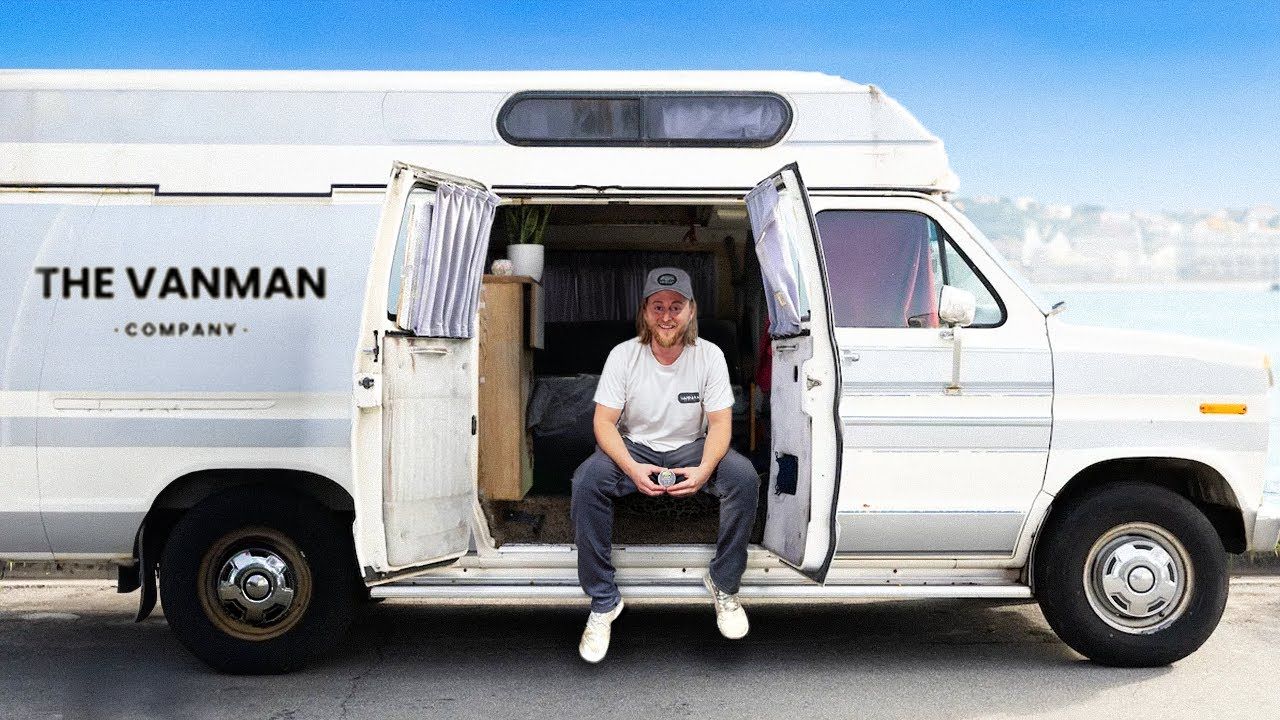
Most businesses start with someone being fed up. Jeremy — known online as VanMan — was fed up with his job, fed up with fluoride toothpaste, and fed up with the life he was living. So he sold his stuff, bought a beat-up $2,000 van off Craigslist, and drove off to reset. What came next is one of the more quietly remarkable entrepreneurship stories I've come across: a $5 million-per-year natural products company, built by hand, started from a Twitter account and a box of baking soda.
The Origin Story
Jeremy started VanMan in 2021 after ditching his full-time job to document his life on the road. He posted on Twitter about van life, health experiments, and his growing interest in natural, often animal-based alternatives to everyday products. One small moment kicked everything off: he accidentally bought fluoride toothpaste, and instead of just rolling with it, he swore it off entirely. He started brushing with plain baking soda. Simple, but it sent him down a rabbit hole.
Then he watched a video of Arnold Schwarzenegger tossing a raw egg — shell and all — into a protein shake. It sounds absurd, but it got Jeremy reading about the mineral content of eggshells. Turns out eggshell powder is rich in calcium and has been used for teeth remineralization. So he started mixing it into his baking soda paste and tweeting about the whole experiment as he went. His followers were curious. Then they started asking if they could buy it.
That's the part worth paying attention to. He didn't go off and build a product in secret, then launch it cold. He built the product *in public*, shared every iteration, and by the time it was ready, he already had people waiting.
From Twitter to First Sale
The launch was not some polished drop with countdown timers and influencer deals. It was Jeremy posting to his Twitter community — people who already shared his interest in the animal-based lifestyle and already trusted his experiments. Within the first 20 minutes, he sold close to 100 units. In the first hour, he had made a couple hundred dollars. For a guy living in a van, that was enough to prove the idea had legs.
His first month doing this seriously brought in $5,000. That number grew. His best single month has been $1.6 million. In 2023 alone, VanMan did over $5 million in revenue. And the whole thing grew out of a community he had already built before the product existed.
This is the playbook a lot of people talk about but few actually execute: build an audience around your authentic interests, then sell them something you genuinely believe in. Jeremy wasn't performing a niche. He was living it.
The Products
The original Tooth Powder is still one of VanMan's best-sellers. But the number one product — and this apparently surprised even Jeremy — is the Tallow & Honey Balm. It blew up organically through customer reviews and word-of-mouth sharing on social media, with zero paid marketing driving it. People tried it, loved it, and told other people. That's the dream scenario in e-commerce, and it happened without a single ad dollar behind it.
The product line has since expanded into deodorant, mouthwash, and hair oil, with soap coming soon. Every product follows the same philosophy: replace something you use every day with a cleaner, more natural, animal-based version. The core idea is almost personal — Jeremy is essentially building the bathroom he wanted for himself and inviting other people to use it too.
Inside the Operation
The warehouse is in San Diego, and on an average day the team ships between 500 and 600 orders. What's striking is how manual the operation still is. The tallow balm is still scooped into jars by hand with a spoon — the same way Jeremy did it on day one. He's intentional about keeping it that way. There's something in the handmade nature of the product that feels aligned with the brand itself: a company built around going back to basics isn't going to slap everything on a fully automated production line.
Everything — creation, packaging, shipping — is handled in-house. For a business doing over $5 million a year, that's a serious operational commitment. But it also means he controls the quality at every step.
The Marketing Engine
This is where things get genuinely interesting. Once the initial Twitter community had been tapped, Jeremy needed a way to reach cold audiences at scale. His answer: provocative meme marketing on Instagram.
His theory is simple — the most divisive posts generate the most comments, and more comments means more reach. So he leans into it. He'll take a current event or a recognizable image — something like a photo of Mel Gibson and Mark Wahlberg sitting together at a UFC fight — and write a story or dialogue around it that ties back to VanMan's brand and ethos. The posts are shareable, a little edgy, and they spread. When they hit, there's a measurable spike in sales.
The key to making this work, he says, is being perpetually online. You have to catch the moment while it's happening, turn it into content fast, and post it while people are still talking about it. It's a high-attention, high-effort strategy, but it doesn't cost anything in ad spend.
Beyond meme marketing, Jeremy found email to be one of his most powerful channels. Once someone buys, getting them into an email list and nurturing that relationship compounds over time. E-commerce brands that ignore email are leaving serious money on the table — VanMan isn't making that mistake.
The Long Game
Jeremy's vision for VanMan goes well beyond bathroom products. He wants to expand into food — selling their own tallow, then beef from their own farms, then honey. The end goal is to become vertically integrated: owning the farms where their cows and bison are raised, controlling the supply chain from field to shelf.
The dream is to offer premium, high-quality meat and dairy at Walmart-level prices, with the profits from the personal care business subsidizing the food side. It's ambitious, but it follows a logical thread — the same customer who buys fluoride-free tooth powder probably wants to know exactly where their beef comes from.
Adding more products also solves a real e-commerce math problem: increasing average order value. Shipping costs money. If a customer is already placing an order, every extra product they add is nearly pure margin improvement. The expansion into deodorant, mouthwash, and hair oil isn't just about diversification — it's about making each customer relationship more profitable.
Advice for Starting From Zero
If someone asked Jeremy where to start today, his answer is Etsy. Browse the platform for product ideas that already have demand, put your own spin on them, and start selling directly on the platform. Then use a small budget to test Etsy ads on different products. When you find one that converts, you've found your winner — and you build from there.
His other piece of advice is more of a mindset thing: don't quit after a few failures. Most people try something once, it doesn't work, and they go back to their job. Jeremy's perspective is that if you truly want to build something, you have to refuse to accept the alternative. Never accept that life, as he puts it. Keep going until something sticks.
It's not complicated advice. But VanMan is proof that following it actually works. A $2,000 van, a box of baking soda, and a Twitter account. That's what this started with. The rest is just showing up, being real with your audience, and not stopping when it gets hard.
Original video
https://www.youtube.com/watch?v=6iqo7lNR_m0