 Story
How a Simple Habit Tracker App Hit $13K/Month
Frederick James quit big tech, built a beautifully designed habit tracker, and scaled it to $13K/month using Apple Search Ads and TikTok. Here's his full playbook.
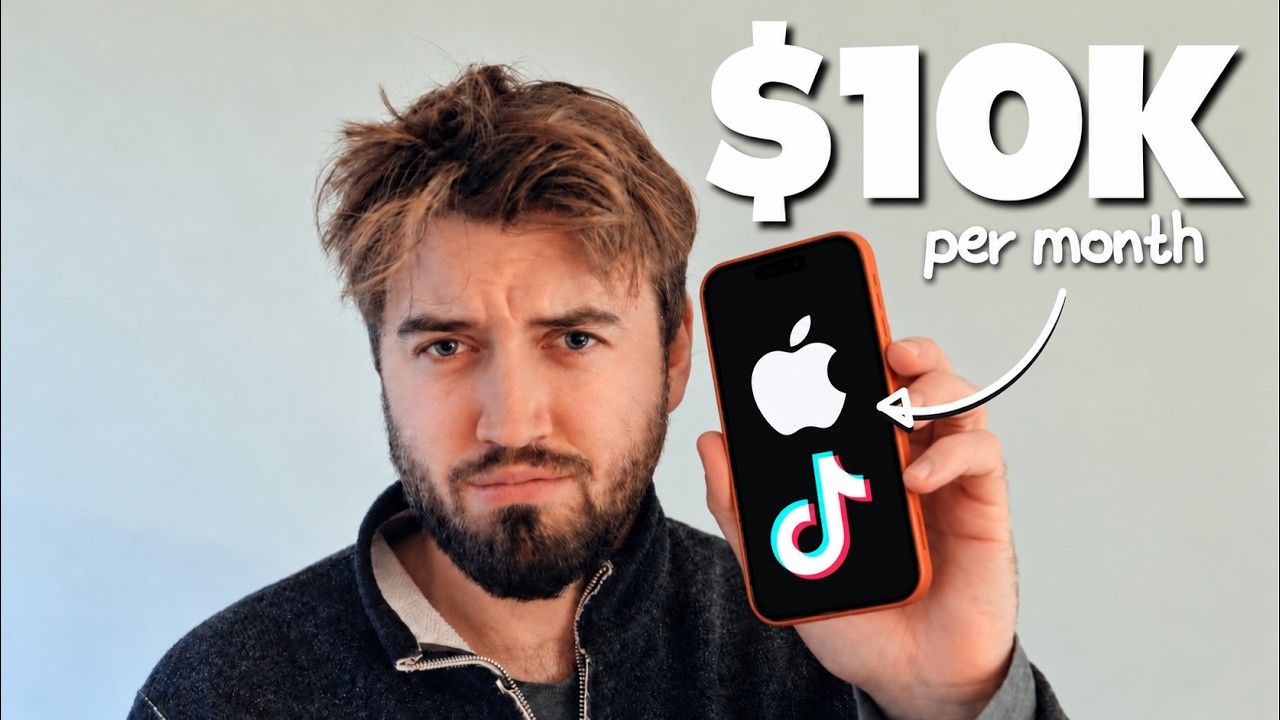
Most people look at a saturated market and walk away. Frederick James looked at the habit tracker category — one of the most crowded spaces in the App Store — and saw an opportunity. His insight was simple: the existing apps weren't that well-designed, a couple of obvious features were missing, and nobody had packaged it all together with a premium feel. So he built it himself. That app now generates over $10,000 a month, peaking at $13,000 MRR, with an ARR that touched just under $100,000.
Frederick spent five years as a software developer in big tech in London. Good salary, stable career, the whole package. But he was restless, unhappy with the 9-to-5 grind, and then a health scare pushed him over the edge. He quit, started traveling, and went all-in on building his own apps — sharing everything publicly on X (formerly Twitter). What followed wasn't luck. It was a structured, repeatable playbook that he broke down in a recent interview, and it's worth understanding in detail.
Stage 1: Finding the Idea
Frederick didn't come up with some revolutionary concept. He was scrolling X when he saw a post breaking down the onboarding flow of another health and fitness app. He studied it, recognized its weaknesses, and realized he could build a better version — cleaner design, a few missing features added, and a much stronger visual identity.
The value proposition wasn't a brand new feature set. It was premium design in a space where most apps look like they were built in 2014. He believed that if the interface felt polished and intentional, it would sell itself, even in a saturated market. That bet paid off. His download-to-paid conversion rate sits at around 7%, which is genuinely strong for the health and fitness niche. The refund rate? Just 0.7%. Those numbers suggest that people who download the app like what they see and stick around.
Stage 2: The Three-Stage Build Process
Once the idea was validated in his head, Frederick followed a disciplined three-part process before writing a single line of code.
Preparation is everything. He mocks up the entire UI in Figma first — not rough wireframes, but proper, high-fidelity mockups. He also creates an Entity-Relationship Diagram (ERD) to map out the data structure before touching the backend. And critically, he designs the App Store screenshots during this phase too, not as an afterthought. The screenshots are part of the product.
Building is where it gets interesting from a workflow perspective. He pulls image assets from Pinterest for visual inspiration, then uses GPT Image 2.5 to generate unique versions of those assets so he isn't just copying someone else's aesthetic. He then feeds the Figma mockups directly into ChatGPT to build out the UI flow, using AI agents to handle the heavy lifting of implementation. He's paying around $100/month each for ChatGPT and Claude.ai, which he considers well worth it. He also invested $300 in a custom font to differentiate his branding across all assets — a small cost that has a surprisingly large impact on how premium everything feels.
A/B Testing starts the moment the app is live and never really stops. He continuously iterates on the paywall, pricing structure, and conversion points. This isn't a launch-and-forget project. It's a living product.
Stage 3: The Tech Stack
Frederick keeps his infrastructure lean and cost-efficient. The entire backend runs on Cloudflare — R2 for asset storage (free tier), D1 for the database, and Cloudflare Workers for compute. It's a modern, serverless setup that scales without requiring him to manage servers.
For mobile measurement, he uses AppsFlyer, which is free up to 12,000 installs — more than enough to get traction before you're spending anything on attribution. Monetization and subscription tracking are handled by RevenueCat, which gives him the dashboards he needs to watch MRR, conversion rates, and churn in real time. The whole stack is built for a solo developer who wants to move fast without accumulating technical debt or infrastructure headaches.
Growth Phase 1: $0 to $5K MRR with Apple Search Ads
Before touching TikTok, Frederick used Apple Search Ads to get his first real traction. His playbook here is four steps.
First, he built a genuinely high-quality App Store page. Beautiful screenshots, clear copy, strong visual identity. This isn't optional — your App Store page is your landing page, and if it looks amateur, no amount of ad spend will save you.
Second, he set up proper tracking and attribution through RevenueCat before spending a single dollar. You can't optimize what you can't measure.
Third — and this is the tactical move most people miss — when setting up the Apple Search Ads campaign, he turns off Search Match entirely and only runs on exact keywords. More importantly, he targets the names of major competitors directly. We're talking apps like Duolingo and other big-name health and fitness apps. When someone searches for a competitor by name, they're showing very strong intent. Showing up in that moment is incredibly valuable.
Fourth, he starts with Apple's recommended max bid, runs it for a couple of days, and if it's not spending, he just increases the bid. Simple, but effective. This approach got him from zero to $5,000 MRR before he even touched social advertising.
Growth Phase 2: $5K to $10K MRR with TikTok Ads
The jump from $5K to $10K MRR happened in roughly a week. That kind of velocity is almost impossible with organic methods alone, and it came from a very specific TikTok ads strategy.
The process starts with research. Frederick identifies viral video formats in his niche — content that's already proven to resonate with his target audience — and then remakes them using AI. He doesn't try to invent new formats from scratch. He finds what works and makes his own version of it.
He then runs five different formats simultaneously at $50 each in ad spend. This is a testing phase, not a scaling phase. The goal is data, not profit. He keeps running formats that convert, even if they're slightly unprofitable in the short term, because every impression and conversion is teaching TikTok's algorithm who his customers are.
The real magic is in the scaling mechanism: goal-based bidding with a target Cost Per Acquisition (CPA). Once TikTok's algorithm identifies creatives that are hitting his target CPA, it automatically starts scaling the budget. Frederick described watching the daily spend jump from $200/day to $1,000/day almost automatically — a genuine snowball effect once the algorithm locks in. That kind of automated scaling is difficult to replicate with other paid channels.
The profit margin at this stage sits around 30%, which is lower than organic, but the speed and scale are simply not comparable.
Paid Ads vs. Other Approaches
Frederick is clear-eyed about the tradeoffs. Marketing always costs something — either time or money. Paid ads like Apple Search Ads and TikTok are a way of paying with money: faster results, more scalable, but lower margins. Influencer marketing and UGC campaigns can be more profitable, but they require a serious investment of time and management overhead that a solo developer may not have.
His take is that the most sustainable strategy isn't picking one approach and ignoring the others. It's layering them. Start with paid ads to get initial data and traction. Use that revenue to fund organic experiments. Let the combination of channels de-risk your growth over time.
For someone building solo, that's a genuinely sensible framework. You can't do everything at once, but you also can't rely on a single channel forever.
Takeaways
Frederick's story isn't about building something nobody has ever seen before. It's about finding a crowded market, making something visibly better, and then running a disciplined growth playbook until the numbers work. A 7% conversion rate and a 0.7% refund rate don't happen by accident — they're the result of careful UI design, a strong App Store presence, and continuous A/B testing after launch.
The tools are accessible. Cloudflare, RevenueCat, AppsFlyer, ChatGPT, Claude — none of these are secrets. The tech stack is lean and cheap. The ad platforms are available to anyone with a credit card. What separates Frederick is that he actually structured his process, ran the experiments, and scaled what worked.
If you've been sitting on an app idea because the market feels too crowded, this is worth thinking about. Crowded markets have customers. The question is whether your product and your marketing playbook are good enough to earn them.
Original video
https://www.youtube.com/watch?v=g9J_-5w9Nrs