 Story
StoryHow a Manifesting App Hit $340K/Month in Just 2 Months
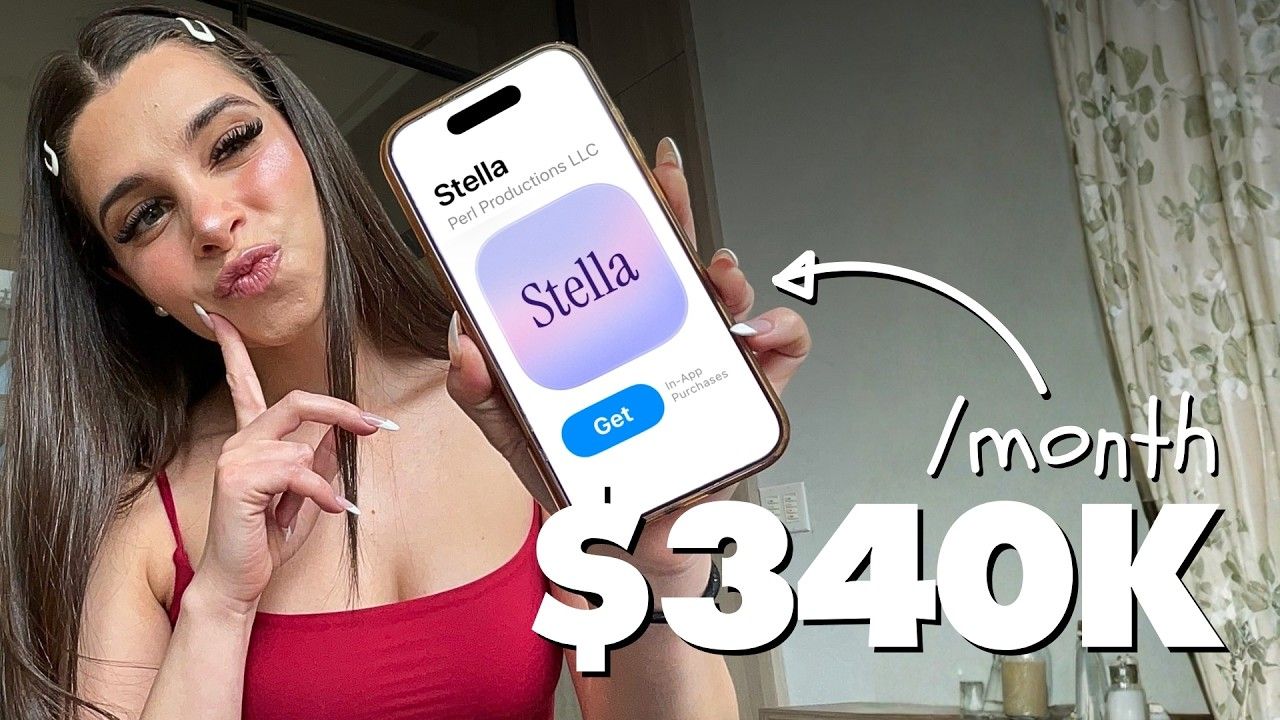
Sarah Perl built Stella, a manifesting app, and took it from zero to $340K MRR in two months. Here's exactly how she did it.
Sarah Perl is 23 years old. Her app, Stella, crossed $340,000 in monthly recurring revenue within two months of launching. That's not a typo, and it's not a fluke.
Sarah — known online as 'Hot High Priestess' — built a manifesting app powered by AI, brought her audience with her on day one, and proved that the next generation of app founders doesn't look anything like what Silicon Valley expected. As she put it bluntly in her interview with Pat Walls on Starter Story: *"Women are going to dominate this app space, and men should prepare for that."*
I think she's right. And the way she got here is worth studying closely.
What Stella Actually Does
Stella is a manifesting app. Users type in their dreams and desires — specific goals, things they want to feel, experiences they want to attract — and the app generates custom audio visualizations and daily affirmations tailored to exactly what they described. It's personal, it's AI-generated, and it's dead simple to use.
The numbers Sarah shared from her revenue dashboard are hard to ignore: $341,537 MRR, 12,379 active subscriptions, and over 200,000 downloads. All within two months of launch. The conversion rate — the percentage of people who download and then actually subscribe — is unusually high, and Sarah is clear about why: her followers were already bought into *her* before the app ever existed. When Stella launched, it wasn't a cold start. It was a warm handoff.
The "Skill of Virality" Is the Real Product
The most predictable reaction to Sarah's story is: *"Sure, but she already had millions of followers. That's not replicable."* It's the excuse people reach for when someone else's success feels too far away.
Sarah has heard it. She disagrees — and she came with receipts.
She argues that the real asset isn't an existing audience. It's the skill of virality: the ability to understand what content resonates, why it spreads, and how to replicate that across any account, any niche, any platform. To prove it, she's gone and built multiple new TikTok accounts from scratch. One new account grew to over 40,000 followers in a few months. Another account she describes as a "spam account" has accumulated over 700,000 followers. Starting from zero.
This reframe matters a lot. Most people think about building an audience as something you either have or don't have — a lucky break, a head start, a privilege. Sarah treats it like a craft. A skill you can learn, practice, and deploy deliberately. And if you can master that skill, the distribution problem for whatever product you want to build essentially solves itself.
1.2 million followers on Instagram. 2.8 million on TikTok. Over a billion combined views. That didn't happen by accident — it happened because she figured out a repeatable system for making content that people couldn't stop watching and sharing. That's the actual business she built first.
Building for an Underserved Market
Before Stella, Sarah had already been monetizing her social presence — running a successful TikTok Shop brand and figuring out how to turn attention into revenue. When she looked at the consumer app space, she saw something obvious that most developers had apparently missed: almost none of these apps were built *for women, by women*.
Most apps that touch on wellness, self-improvement, mindset, or manifesting were created by men — people who, by definition, don't fully understand the specific texture of what their female users are looking for. Sarah saw the gap clearly because she *was* the target user. She wanted a tool that could create personalized, custom visualizations for her own specific goals, and nothing on the market did it the way she envisioned.
So she built it herself. The idea for Stella came directly from her own unmet need. That's almost always how the best products get made — not from market research spreadsheets, but from a founder being genuinely frustrated that the right thing doesn't exist yet.
AI Removed the Last Excuse
Five years ago, Sarah's version of this story probably doesn't happen. You'd need a technical co-founder, a development team, months of runway, and a whole lot of luck navigating the build process without knowing how to code.
AI changed the equation. Sarah had no coding background, but the rise of AI-powered development tools meant she could take an idea from concept to MVP without needing to hire a traditional engineering team first. The technical barrier — the thing that had historically kept non-technical founders out of the app space — got dramatically lower.
This is the part of her story that has the biggest implications for everyone else. It means the bottleneck for building a consumer app is no longer *can you build it* — it's *do you understand your user deeply enough to make something they actually want, and can you reach them?* Sarah had both. She understood her audience intuitively because she was part of it, and she already knew how to reach millions of them for free.
She believes this shift is about to unlock a wave of female founders in the consumer app space specifically — not because of some abstract equity argument, but because women have been building skills in community, content, and audience trust for years on platforms like TikTok and Instagram. Those skills translate directly into the distribution advantages that make consumer apps succeed or fail. They just haven't been pointed at software products yet. Stella is an early signal of what happens when they are.
What Most People Get Backwards
Sarah made an offhand comment in her interview that I keep thinking about: she believes most people are building apps backwards.
The typical playbook goes: have an idea → build the product → figure out how to find users → struggle with distribution forever. Most apps die in that last step. Distribution is brutal if you're starting from zero credibility and zero audience in a crowded market.
Sarah's playbook inverted it: build a massive, loyal, engaged audience around a genuine identity and point of view → understand exactly what that audience wants → build the product *for them* with that unfair distribution advantage already locked in.
By the time Stella launched, she didn't need to convince anyone to trust her. Her followers had been watching her content, engaging with her ideas, and buying into her worldview for years. The app wasn't a pitch to strangers — it was an invitation to people who already believed in her. That's why the conversion rate was high. That's why 200,000 downloads happened fast. That's why $341K MRR in two months is the outcome and not the miracle.
The Takeaway
Sarah Perl's story isn't really about manifesting — it's about distribution, timing, and building something for people who are underserved by the existing market. She combined a genuine personal brand with AI tooling that removed the technical barrier, aimed it at a gap that should have been obvious but wasn't, and executed fast.
The next wave of founders isn't going to come out of computer science programs. They're going to come from creators who've spent years mastering virality, community, and trust — and who finally have the tools to turn that into software. Sarah is one of the first. She won't be the last. 🚀
Original video
https://www.youtube.com/watch?v=Eg93po_DAYo