 Story
StoryHow a Lemonade Stand Turned Into a $250K/Year Business
One entrepreneur went from watching a YouTube video to making $12,000 profit at his first event. Here's how a simple lemonade stand became a full-time, six-figure business.
Most people walk past a lemonade stand and think "cute kid hustle." Almost nobody looks at it and thinks "six-figure business." That's exactly why this opportunity exists.
The story starts the way a lot of great businesses do — with a YouTube video and a healthy dose of skepticism from the internet. Our guest saw a video of a guy making $7,000 a day selling lemonade. The comments were full of people saying it was fake, exaggerated, or just plain impossible. Instead of scrolling past, he decided to test it himself. No prior experience. No business background. Just watching videos and figuring it out.
His first event? He made $12,000 in profit. Not revenue — profit. The concept was very much viable.
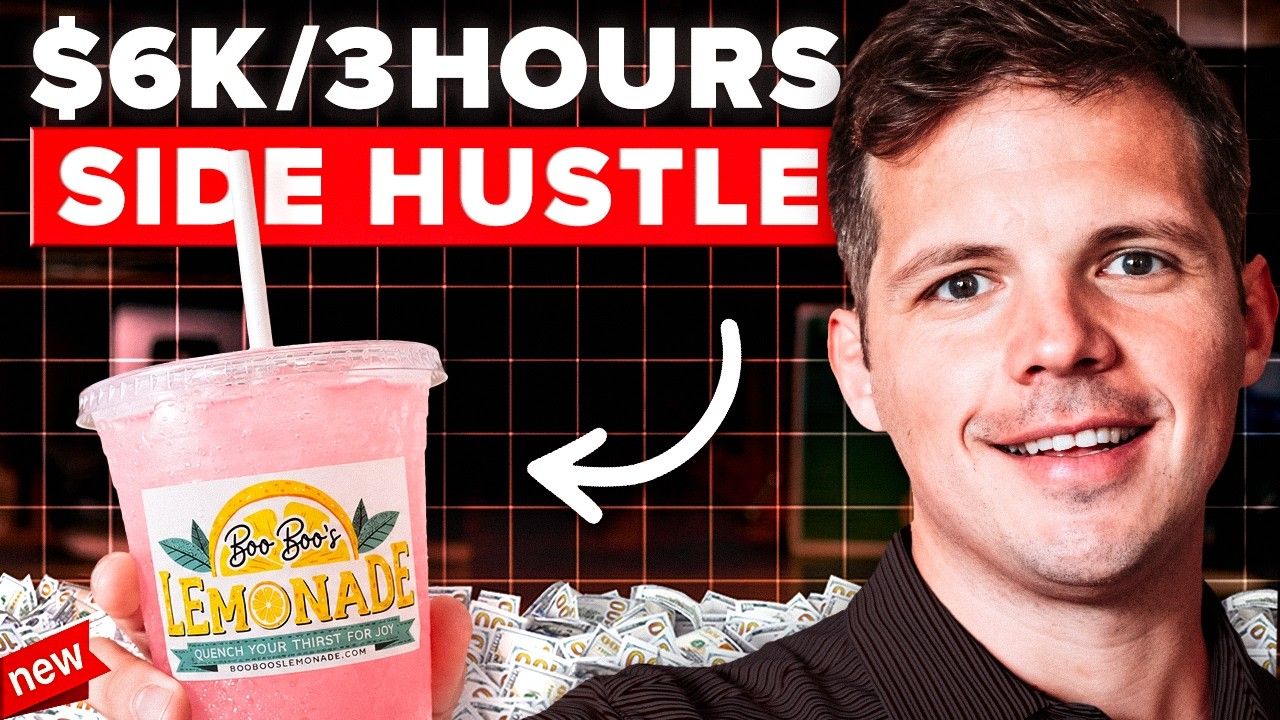
Three years later, the business is hitting $250,000 in annual revenue, primarily from farmers' markets. He made nearly $6,000 in a single three-hour window at one event. And he genuinely believes they can scale this to half a million dollars within the next year or two. All from fresh-squeezed lemonade.
The Business Everyone Overlooks
There's something almost poetic about the fact that the lemonade stand is hiding in plain sight. It's so associated with kids making a few summer dollars that most adults never take it seriously as a real business. Our guest leans into this. He calls himself a "middle-aged lemonade stand entrepreneur" with zero apology, because the margins are, in his own words, "stupid" high.
He's also turned it into a family operation. His kids work alongside him, learning the basics of entrepreneurship firsthand — setting up, serving customers, handling transactions. What started as a weekend side hustle gradually became the family's full-time occupation. That evolution didn't happen by accident; it happened because the numbers were too good to ignore.
Startup Costs Are Basically Nothing
Here's the part that should stop you mid-scroll: you can technically start this business with a muddler, a knife, and a cutting board. That's it. A table and a tent get you to your first market. You don't need a custom cart or a converted horse trailer to make your first dollar.
The guest is very deliberate about this point. He doesn't want aspiring entrepreneurs spending weeks setting up an LLC, designing a logo, and buying equipment before they've ever made a sale. His advice is blunt and refreshing: just do it. Get a table. Get a tent. Show up. The business teaches you everything you need to know far faster than any amount of planning does.
As the revenue grows, you scale the equipment. He eventually moved up to a custom lemonade cart and later a converted horse trailer that functions as a mobile bar at the Dallas Farmers Market. But none of that was necessary on day one.
The Recipe: Stupidly Simple, Surprisingly Good
The product itself isn't complicated, and that's part of the magic. Fresh-squeezed lemonade made from three ingredients: lemons, water, and sugar. No concentrates, no artificial flavors, no mystery syrups.
The process makes all the difference. They take a whole lemon, wedge it, and smash it directly into a 32-ounce cup. This extracts not just the juice but also the oils from the lemon rind, which adds a depth of flavor you simply can't get from a bottle. The sweetener is a simple syrup — a 1:1 ratio of cane sugar and water — which ensures the sugar is fully dissolved and the drink has a clean, smooth texture instead of a grainy finish.
From there, they offer added flavors. Strawberry and mango are fan favorites, giving customers a reason to try something new on repeat visits and come back week after week.
The Numbers That Make This Work
Let's talk margins, because this is where it gets genuinely exciting.
A 32-ounce cup of plain lemonade sells for $7. The cost to produce that cup — including the cup itself, one lemon, and ice — runs about $1.25. That's a margin that most restaurant and food service businesses would dream about.
Ice is actually one of their biggest ongoing costs. They use a delivery service called Emergency Ice and pay roughly $1 per pound. Each 32-ounce cup uses approximately one pound of ice, so ice alone is a significant line item. Lemons and sugar are sourced wholesale from suppliers like Restaurant Depot and Ben E. Keith, buying in bulk to keep per-unit costs low.
Even accounting for all of that, the profit per cup is extraordinary. When you're doing volume at a busy farmers' market, those margins stack up fast.
Multiple Revenue Streams, One Core Product
The farmers' markets are the engine, but the business has smartly diversified beyond weekend stands.
Catering is a major revenue arm. Corporate events, family gatherings, private parties — these typically run 2 to 3 hours and generate between $1,000 and $3,000 per booking. You show up, serve lemonade, and leave. The setup is minimal, the labor is manageable, and the pay-per-hour rate is excellent.
Cart rentals are another stream that requires almost no active labor. They rent out their lemonade cart for events like wedding cocktail hours at a flat fee of $500 for a four-hour rental, which includes drop-off. The customer handles everything on-site; he just drops off the cart and picks it up later. That's a remarkably good hourly rate for essentially passive work.
Market expansion has also played a role in growth. They started at the Frisco Fresh Market, then expanded to the Dallas Farmers Market where they operate out of a converted horse trailer — a setup that doubles as a marketing asset, since it turns heads and draws people in.
The combination of these three channels — markets, catering, and rentals — creates a resilient business that isn't dependent on any single venue or event type.
The Mindset That Makes It All Happen
What strikes me most about this story isn't the revenue number or the margin breakdown — it's the decision to just try it. He saw a YouTube video, ignored the cynics in the comments, and ran the experiment. That first event made $12,000 in profit and answered every question the skeptics raised.
The business grew because he kept moving instead of waiting for perfect conditions. He didn't spend months building a brand before going to his first market. He grabbed a table and a tent, made lemonade, and let the results do the talking.
That's the real lesson here. Simple businesses are overlooked precisely because they feel too obvious, too unglamorous, too easy to dismiss. But "simple" doesn't mean small. It can mean $250,000 a year with room to double. It can mean a full-time family business built around a product with three ingredients. It can mean teaching your kids what entrepreneurship actually looks like up close.
The lemonade stand was never just for kids. Turns out, most adults just weren't paying attention.
Original video
https://www.youtube.com/watch?v=5TZylaKGWUE