 Story
StoryHow a Gourmet Marshmallow Business Makes $300K/Month
Lindzi Shanks started XO Marshmallow with $200 and a Pinterest recipe. Ten years later, she's selling 3 million marshmallows a year. Here's exactly how she did it.
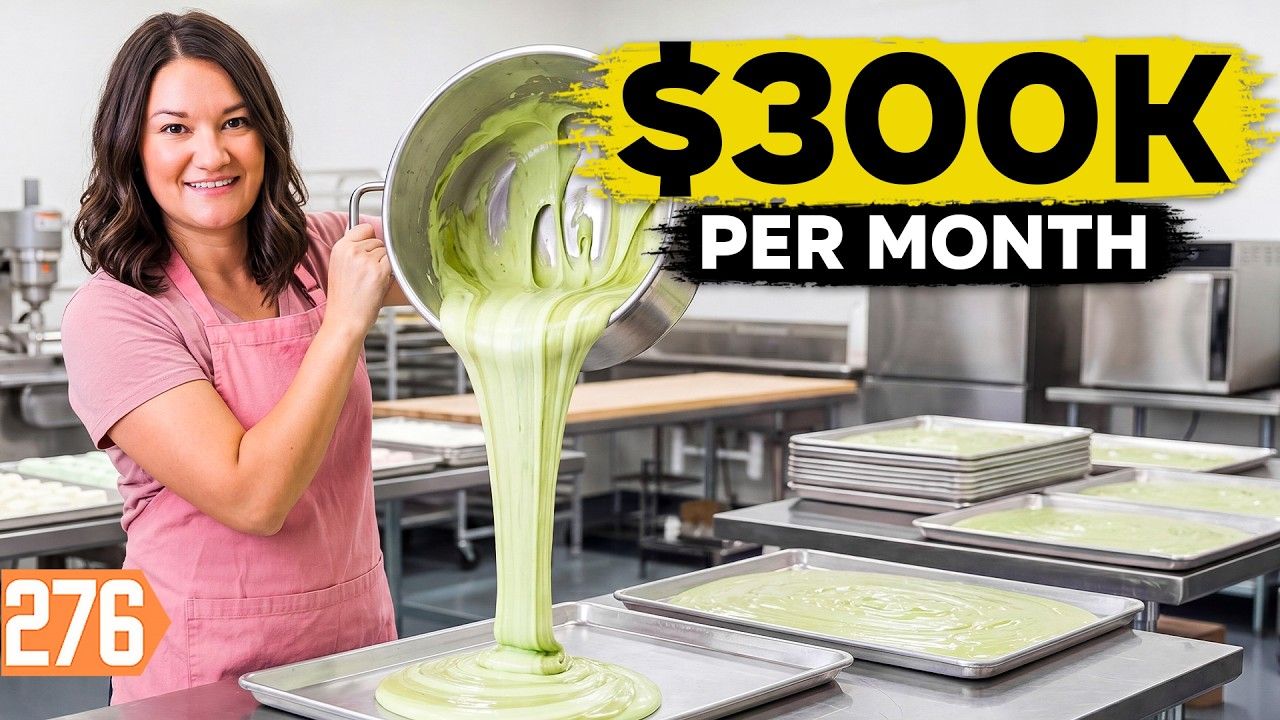
Some business ideas sound too niche to work at scale. Gourmet marshmallows is one of them. And yet Lindzi Shanks, co-founder of XO Marshmallow, is selling 2–3 million marshmallows a year and pulling in somewhere between $200,000 and $300,000 every single month. Started with $200. No outside funding. No fancy food science degree. Just a Pinterest recipe and a lot of hustle.
Let's break down how the whole thing works.
The Origin Story: Pinterest → Farmers Markets → Kickstarter
The business didn't start as a business. Lindzi's former partner — who was in law school at the time — stumbled across a marshmallow recipe on Pinterest while looking for inexpensive homemade gifts. After graduating, instead of practicing law, she decided to chase marshmallows. Lindzi, who had a master's in psychology and was already running a clothing business, made the same leap into entrepreneurship.
They started where most scrappy food businesses start: farmers markets and pop-ups. Customers loved it. And they kept asking the same question — where's the permanent location? So Lindzi and her partner did something bold. They launched a Kickstarter to fund what they called the world's first marshmallow cafe. It was fully funded in under three weeks.
The cafe ran for eight years. Then, at the end of 2024, they closed it. Not because the business was struggling — because e-commerce had exploded. During COVID-19, their online sales grew 350%. The cafe was a beautiful brand moment, but the real opportunity was shipping marshmallows to people's doorsteps across the country. So that's where they put their energy.
The Products: Simple Lineup, Clear Price Points
Core boxes: A box of 12 gourmet marshmallows goes for $12. Every product is gluten-free, which widens the customer base and removes a common barrier for food-sensitive buyers.
OMG Fluff: Their marshmallow fluff product, priced at $12. The name came directly from customers — people would take their first spoonful and literally say "oh my god." Lindzi leaned into that reaction and turned it into a product name. Good branding usually comes from listening, not from a boardroom.
Treats: Chocolate-covered marshmallows paired with cookie dough or brownies, sitting around $14. These are the upsell items — higher perceived value, great for gifting.
The pricing is accessible enough to be an impulse buy but premium enough to signal quality. That combination matters a lot in the specialty food space.
Starting From Home: The $19.79 Ingredient List
Lindzi walked through exactly what you'd need to get started, and the answer is almost nothing. The core ingredients for a basic marshmallow recipe — pure granulated sugar, powdered sugar, light corn syrup, and unflavored gelatin — cost her and the host $19.79 at the grocery store.
For flavoring, they grabbed fresh strawberries. The trick is to muddle the strawberries down into a syrup and use that to replace some of the water in the recipe. This keeps the marshmallow from getting too wet while adding real fruit flavor. It's elegant in its simplicity.
This is the kind of thing that matters when you're pitching someone on starting a business. The barrier to entry here is genuinely low. You don't need a commercial kitchen on day one. You need a good recipe and the willingness to sell.
The Numbers That Actually Matter
$200K–$300K in monthly revenue. That's the headline number. But the metric Lindzi keeps coming back to is the 45% re-order rate. Nearly half of their customers come back and buy again. In e-commerce, that's the number that determines whether you have a business or just a marketing treadmill.
They drive that re-order rate through a "Marshmallow of the Month" club — a new flavor every single month that keeps the VIP customer base excited and coming back. It's a simple loyalty mechanic, but it works because it gives existing customers a reason to return without needing a discount or a promotion. New product drops replace the need for constant new customer acquisition.
Lindzi's growth philosophy is refreshingly straightforward: double down on the people who already love you. Increase average order value. Let happy customers do the word-of-mouth work. New customer acquisition matters, but if your retention is broken, you're just pouring water into a leaky bucket.
TikTok and the Power of Authentic Content
XO Marshmallow built a strong organic presence on TikTok through behind-the-scenes content. Not polished ads. Not influencer campaigns. Just real footage of how the marshmallows get made, the team working in the facility, the textures and colors of the product. That kind of content works because it's inherently satisfying to watch — the sugar being poured, the mixer running, the cutting machine doing its thing.
For a food business, this is almost unfair. You have a visually compelling product and a production process that people genuinely want to see. Lean into it. Authenticity on TikTok consistently outperforms production value, and a gourmet marshmallow operation has plenty of authentic moments to share.
Scaling the Production: A 10,000-Square-Foot Operation
The current facility is a custom-built 10,000-square-foot space. Here's how the three-day production cycle works:
Day 1 — Cooking and mixing: Sugar syrup is cooked in large pots to exactly 240 degrees. Temperature precision matters here — too hot or too cool and the texture changes. The hot sugar gets poured into a large Hobart mixer that already contains gelatin and flavor extracts. The whole mixture whips for 30–40 minutes until it hits the right consistency. It's then poured into trays to set overnight.
Day 2 — Cutting: This is where the $40,000 machine comes in. Lindzi invested in a custom-retrofitted cutter originally designed for sheet cakes. Before this machine, cutting was their biggest production bottleneck. The investment was significant, but it unlocked their ability to scale. The set marshmallow slabs go through, and you get clean, consistent cuts every time.
Day 3 — Coating and packaging: Freshly cut marshmallows are sticky, so they get coated in a mixture of powdered sugar and cornstarch. Then they sit overnight in front of a dehumidifier to pull out excess moisture. After that, they're packaged into heat-sealed bags of 12 and ready to ship.
Three days per batch. Clean, repeatable, scalable.
The Lesson About SOPs
Lindzi is emphatic about one thing for anyone starting a food business: get your Standard Operating Procedures in place early. Before you hire. Before you try to scale. Before you bring on a second production shift.
An SOP is just documentation — how exactly do you make the product, step by step, with the specific temperatures, timing, and measurements written down so anyone can replicate it. In a handcraft food business, the founder usually holds all that knowledge in their head. That's fine when it's just you. It becomes a crisis when you're training employee number five and every batch comes out slightly different.
Combined with a truly scalable recipe — one that works whether you're making 100 marshmallows or 10,000 — SOPs are what transform a talented home baker into an actual company.
Takeaways
XO Marshmallow is proof that niche isn't a weakness. Gourmet marshmallows sounds like a joke until it's generating $300K a month. What made it work:
- Start absurdly small. $200 in starting capital. $19.79 in ingredients. Farmers markets before a storefront.
- Find your retention engine. Their 45% re-order rate is the real business. The Marshmallow of the Month club keeps it alive.
- Let the product make the content. TikTok behind-the-scenes content costs almost nothing and does real acquisition work.
- Invest in the bottleneck. The $40,000 cutting machine was scary. It was also the right call.
- Write the SOPs early. Document everything before you need to. You'll thank yourself later.
The mission at XO Marshmallow is to "spread joy through marshmallows." It sounds cheesy — but it's also just true. They built a product people genuinely love, built systems to deliver it consistently, and let happy customers spread the word. That's a playbook worth paying attention to.
Original video
https://www.youtube.com/watch?v=KiuMoyhH49E