 Story
StoryHow a Friendsgiving Dinner Became a $2.8M Ice Cream Empire
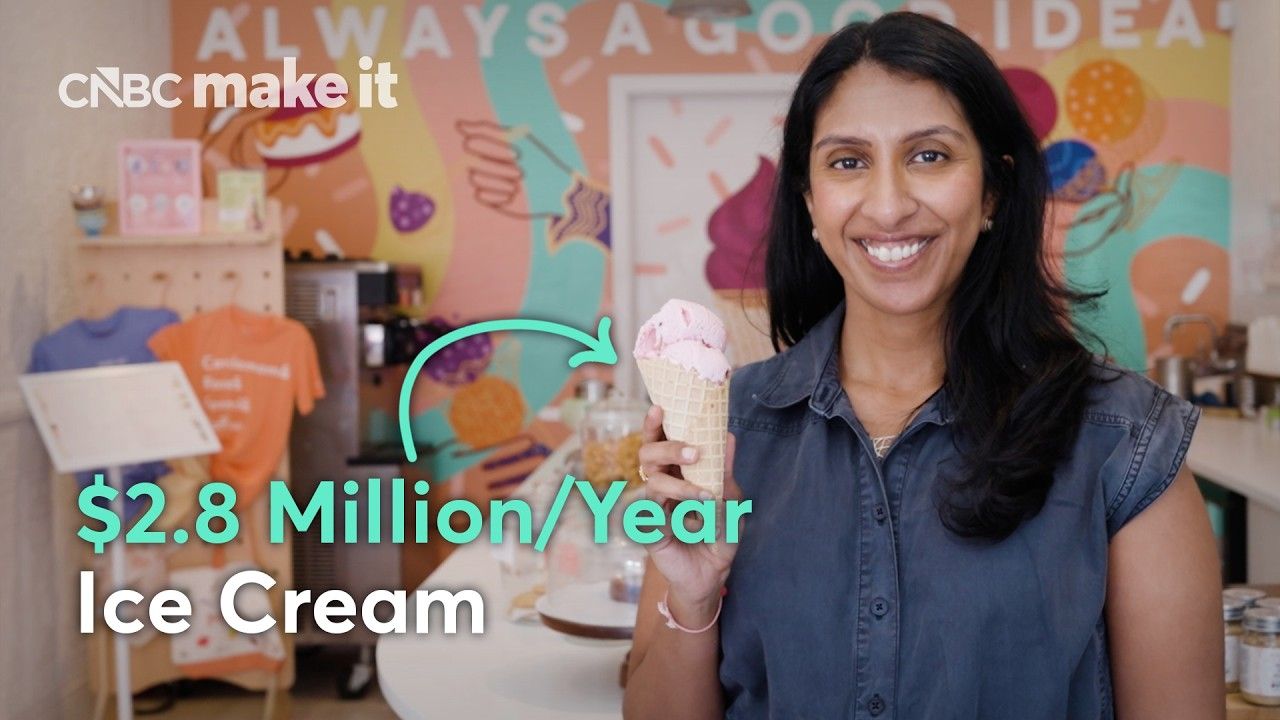
Pooja Bavishi turned a ginger and star anise ice cream base into Malai — a $2.8 million South Asian-flavored ice cream brand with four locations across the US.
There's a version of this story where Pooja Bavishi plays it safe. Where she finishes business school, takes the corporate job, and keeps her love of South Asian spices confined to her home kitchen. Instead, she hosted a Friendsgiving dinner in the fall of 2014, made an ice cream base robustly flavored with ginger and star anise pulled straight from her pantry, and watched her friends lose their minds over it. "We've never had anything like this before," they said. That reaction became the seed of Malai — and a decade later, Malai is a nearly $3 million business.
Pooja is 42 years old and the founder and CEO of Malai, an ice cream company built around one core mission: mainstreaming South Asian flavors into the American palate. Cardamom. Rose. Saffron. Nutmeg. Mango & Cream. These aren't experimental flavor mashups cooked up in a lab to chase a trend. For billions of people around the world, these are beloved staples — deeply familiar, deeply comforting. Malai's job, as Pooja sees it, is simply to normalize them for the American market.
The Idea That Wouldn't Wait
Pooja always knew she wanted to own a dessert business. The pull came from something simple: the idea of "providing joy." But the specific concept for Malai crystallized fast. She conceptualized the business during her last semester of business school — just weeks after that Friendsgiving dinner — and launched in January 2015. No food industry experience. No safety net. Just a clear vision and a willingness to figure it out.
The early days were scrappy in the best possible way. Pooja didn't need much capital at first; she used her grocery budget to make ice cream. On Saturdays, she'd set up at local markets in New York City with help from friends and family, using those early weekends not just to sell but to gather customer data. Who was buying? What flavors were landing? What kept people coming back? That market-stall phase wasn't just survival mode — it was a research operation.
Then came a stroke of luck that changed the trajectory. A New York Times food writer happened to encounter Malai, and the resulting press coverage gave the brand its first real push into public consciousness. That's the kind of thing you can't manufacture, but it rewards the people who show up consistently and do the work.
The Brutal Reality of Frozen Goods
The core challenge: Ice cream is one of the most logistically demanding food products you can build a business around. Everything — production, storage, transport, shipping — has to stay frozen at all times. That means specialized frozen transport, freezers at every location, and expensive overnight shipping packed with dry ice. These aren't optional line items. They're the baseline cost of operating, and they compound quickly.
Malai produces its ice cream and novelties out of a commissary kitchen in Brooklyn, NY. The novelties — kulfi pops, ice cream sandwiches, ice cream cakes — are all made there for the scoop shops. Kulfi, a traditional South Asian frozen dessert, deserves its own mention here: it's chewier and denser than regular ice cream, with a concentrated richness that makes it completely distinct from anything in the conventional American freezer aisle. Producing it the right way takes care, and care takes time and money.
The production process itself involves preparing the base, infusing flavors, churning, and hand-packing pints. There's nothing particularly automated about it at this scale, which is part of what makes the quality consistent — and part of what makes the costs real.
Pricing for Premium
The math: A single scoop at Malai starts at around $7.25, varying by location. That's a premium price point, and Pooja doesn't shy away from it.
The justification runs deeper than branding. Malai uses high-quality, sustainably sourced dairy and spices — ingredients that cost more because they're better. Add in the logistical overhead of running a frozen goods operation, the impact of tariffs and inflation, and rising transportation and storage costs, and the premium pricing starts to look less like a positioning choice and more like a necessity.
The market context: Pooja credits brands like Jeni's and Van Leeuwen for doing the cultural heavy lifting of recalibrating what ice cream can be. Historically, ice cream was a lower-priced product — something you bought by the half-gallon at the grocery store. Those brands came in, introduced high-quality ingredients, and shifted the perception of ice cream into the premium category. That shift opened a door for smaller, differentiated players like Malai to compete on quality and uniqueness rather than price.
Malai's three most popular pint flavors tell the story clearly: Rose with Cinnamon Roasted Almonds, Cardamom Pistachio Crumble, and Mango & Cream. These aren't flavors you'll find at the gas station freezer. They're specific, intentional, and deeply rooted in a culinary tradition that most American ice cream brands have never touched.
From Credit Card Debt to Four Locations
The funding journey: In 2017, Pooja launched a friends and family investment round to fund her first brick-and-mortar store. Then delays hit, as they always do. Rather than wait it out, she made a bold call: she put roughly $200,000 on credit card debt to open the first Malai scoop shop in Brooklyn in March 2019. That's not a comfortable decision. That's a founder betting on herself when the conventional path wasn't moving fast enough.
Where the business stands now: Malai has raised a total of $1.8 million from investors. Pooja has given up some equity along the way, but she remains the majority stakeholder — which matters enormously for a founder whose vision is this specific and this personal. There are now four brick-and-mortar locations: Brooklyn, Washington D.C., Philadelphia, and Manhattan. Those stores account for about 80% of the company's nearly $3 million in annual revenue. The remaining 20% comes from wholesale, e-commerce, and catering.
The first year Malai turned profitable was 2024. That timeline might surprise people who expect fast-growth businesses to print money from day one, but Pooja is clear-eyed about why it took as long as it did: growth is expensive. Every new location requires capital. Every expansion into a new market requires spending before it generates returns. The ambition itself was the thing slowing down profitability — which is a very different problem than a broken business model.
The Mission Behind the Scoops
What makes Malai genuinely compelling isn't just the flavors or the growth numbers. It's the underlying conviction that these flavors belong in the mainstream — not as novelties, not as ethnic curiosities tucked into a specialty aisle, but as American staples.
Cardamom is familiar to billions of people. Rose is beloved across South Asia, the Middle East, and beyond. Saffron has been a prized culinary ingredient for centuries. Pooja's point isn't that these flavors are exotic. Her point is that they're not exotic at all — they just haven't been given the platform they deserve in the American market. Malai is that platform.
"Just getting started" is how she closes. And given that the business hit profitability in 2024, has four locations, and still has room to grow across wholesale, e-commerce, and new markets, it's hard to argue with that framing. The Friendsgiving dinner was just the beginning.
Original video
https://www.youtube.com/watch?v=nThsHXjrpvc