 Story
StoryHow a $40K/Month Solopreneur Actually Spends His Day
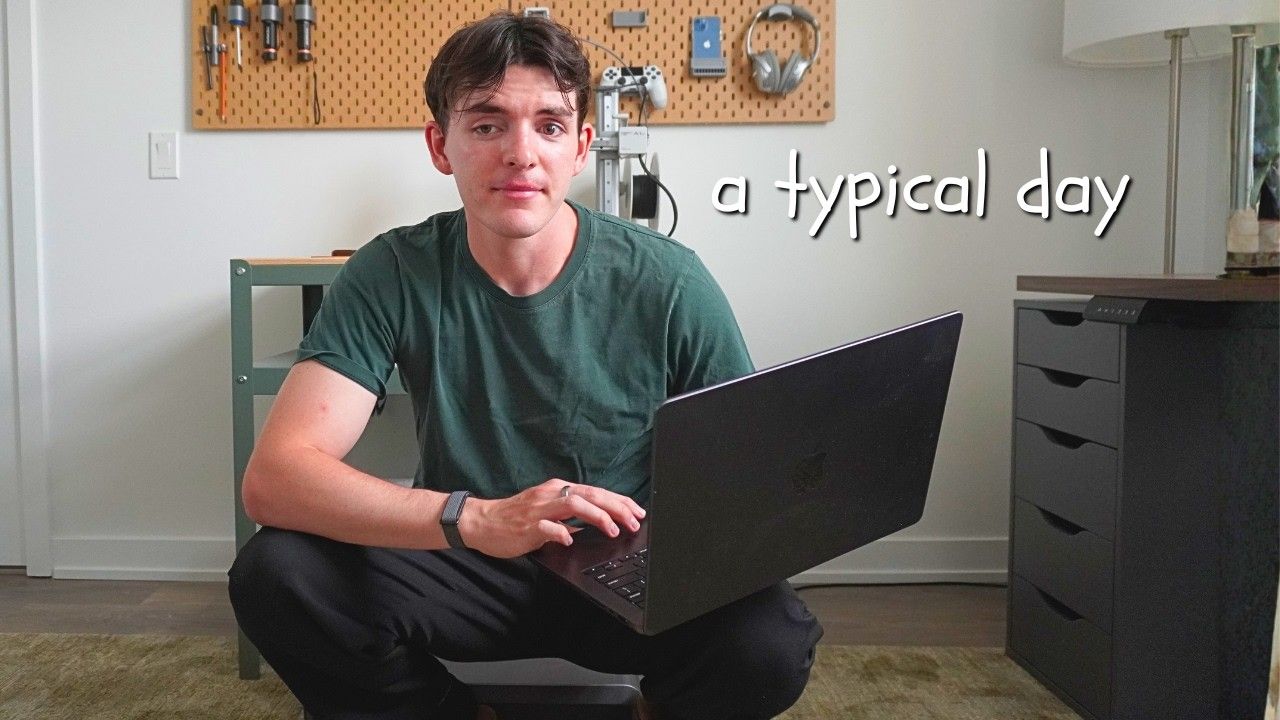
Jack Friks earns $40,000 a month working on his own schedule — no fixed hours, no boss. Here's the flexible system that makes it work.
Jack Friks is a solopreneur pulling in $40,000 a month. Some weeks he works four hours total. Other weeks he's grinding ten-hour days and forgetting to eat lunch. That range isn't a bug in his system — it *is* the system. The whole reason he became a founder was to have the freedom to choose when and how much he works, adapting to his energy and his life rather than forcing himself into a rigid 9-to-5 that never fit him in the first place.
Here's a breakdown of how he actually works — the routine, the mindset, and the journey that got him there.
Step 1: Start With Customer Support
The routine: Jack wakes up without an alarm, usually somewhere between 7 and 8 AM. He brushes his teeth, works out (his go-to is badminton), showers, and makes coffee. Then, before anything else, he opens up customer support.
Why customer support first: He admits it's his least favorite task — which is exactly why he does it first. Get the thing you dread out of the way before your brain starts negotiating with you. But there's a deeper reason too. Fast, helpful support for paying customers is one of the highest-leverage things a solo founder can do. It's a direct feedback loop. Jack credits this habit with improving both Post Bridge and lovelee, two of his products, in ways that directly increased user retention. When people feel heard and helped quickly, they stick around. That compounding effect matters enormously when you're running everything yourself.
Step 2: Build a Consistent Work Environment
The setup: Jack does his best work at his home office desk — comfortable chair, clean space, no clutter. He's tried cafes and moving around, and it just doesn't work for him.
Why environment matters: A stable, familiar environment lets you skip the friction of settling in and go straight to the work. When you sit down at the same desk every day, your brain already knows what mode it's in. There's no novelty competing for your attention. Jack's point is simple but worth saying out loud: everyone has a best way they work, and it's worth figuring out yours rather than copying someone else's aesthetic. His happens to be a quiet home office. Yours might be different. But pick something and stick to it.
Step 3: Work in Sprints, Not Fixed Hours
The cycle: Jack doesn't measure his days in hours. He measures them in energy and context. When he launched his recent project *Ship or Die*, he was putting in 10-hour days, often skipping lunch entirely because he was so fired up and having fun. During a product launch, there's infinite work to do — user feedback flooding in, bugs to fix, features to ship, marketing to tinker with. The inspiration is self-sustaining.
Then the sprint ends: A month or two after launch, things settle. Traffic plateaus, the feedback slows to a trickle, and maintenance mode kicks in. That's when he might work one or two hours a day. If the weather is nice, he'll stop early and go play sports with his fiancée. This isn't laziness — it's a sustainable rhythm. Burning yourself out during the quiet periods makes no sense when the high-intensity sprints are where the real value gets created anyway.
Step 4: The One Thing a Day Rule
The principle: After customer support is handled, Jack decides what to work on based on what feels most important or what he's most excited about that day. It could be squashing a critical bug or building out a new feature he's been thinking about. But he picks *one thing*. Just one.
Why this works: Multitasking is a trap, and Jack knows it. Splitting your focus across three projects in a single day means you end up with shallow progress on all of them instead of real momentum on any one. By dedicating his full attention to a single thing, he actually moves the needle. And because he's his own boss, he gives himself permission to work on whatever he's genuinely curious and excited about. That's not indulgence — that's how the work stays enjoyable long-term, which is the only way it stays sustainable.
Step 5: Build Products That Solve Your Own Problems
The strategy: Every product Jack has ever made started as something he wanted for himself. His first app, Curiosity Quench, was built because he simply wanted it to exist — and it turned out over 100,000 other people wanted it too. While growing that app, he needed a social media scheduling tool that actually fit his workflow. So he built Post Bridge. That product ended up being 100 times bigger than the original app that inspired it.
How he validates: He doesn't over-engineer the validation process. He puts something into the world — a landing page, a TikTok video — and watches how the market responds. Strong reaction? Good sign. Silence? Either the idea needs work or the framing is off. The feedback is usually fast and honest. The market doesn't lie.
This approach has a compounding quality to it. When you're solving your own problem, you already understand the pain deeply. You know what a good solution looks and feels like. You're not guessing at what a customer wants — you *are* the customer. That gives you a massive head start in building something people actually care about.
Step 6: Find Your Own Path
The mindset shift: Jack's biggest piece of advice is to stop trying to copy someone else's playbook. It's tempting — find someone successful, reverse-engineer what they did, repeat. But the path is so tied to the specific person, their specific audience, their specific timing, that it rarely transfers cleanly. What works for Jack might not work for you, and what works for you might not work for anyone else.
What does transfer: Staying curious. Staying optimistic. Experimenting with different approaches until you find the ones that fit your personality, your strengths, your life. Putting your own genuine interests and weirdness into your work is what makes it sustainable and fun — and that energy shows up in the product. People can feel it.
The Journey to Balance
It took Jack two full years to figure out how to actually balance work and life as a founder. He describes a period two and a half years ago when anxiety was at its peak — MRR stuck around $3,000/month, feeling financially squeezed and unable to see a way forward. He kept pushing anyway. Two months later, his app's revenue jumped to $15,000 a month. That milestone changed everything psychologically.
As his income grew and financial security stopped being a daily stress, the desperate need to grind at all hours faded. He didn't need to prove anything to anyone anymore. Now he has a hard stop around 5 PM most days so he can spend real time with his fiancée. That boundary, he says, took longer to establish than almost anything else in his business.
There's something important in that arc. The flexible schedule, the sprint-based work, the one-thing-a-day rule — none of it works as well when you're operating from a place of fear. Financial stability doesn't just change your bank account. It changes the quality of every decision you make.
Takeaways
- Customer support first — it's your best feedback loop and highest-retention lever as a solo founder
- Find your environment — a consistent, distraction-free setup removes friction and gets you into focus faster
- Sprint, don't grind — match your work intensity to the actual demands of each phase
- One thing a day — real progress beats shallow multitasking every time
- Solve your own problems — you understand the pain, you already know what good looks like
- Build your own path — curiosity and genuine passion compound in ways that copying someone else's formula never will
The freedom Jack describes isn't something that happened to him. He built it deliberately, product by product, habit by habit, over two years of figuring out what actually worked for him. That's the part that doesn't show up in the $40K/month headline — but it's the part that makes all of it possible.
Original video
https://www.youtube.com/watch?v=k-aEdS28AH0