 Story
StoryHow a 24-Year-Old Built a $50k/Month Alarm App in 4 Months
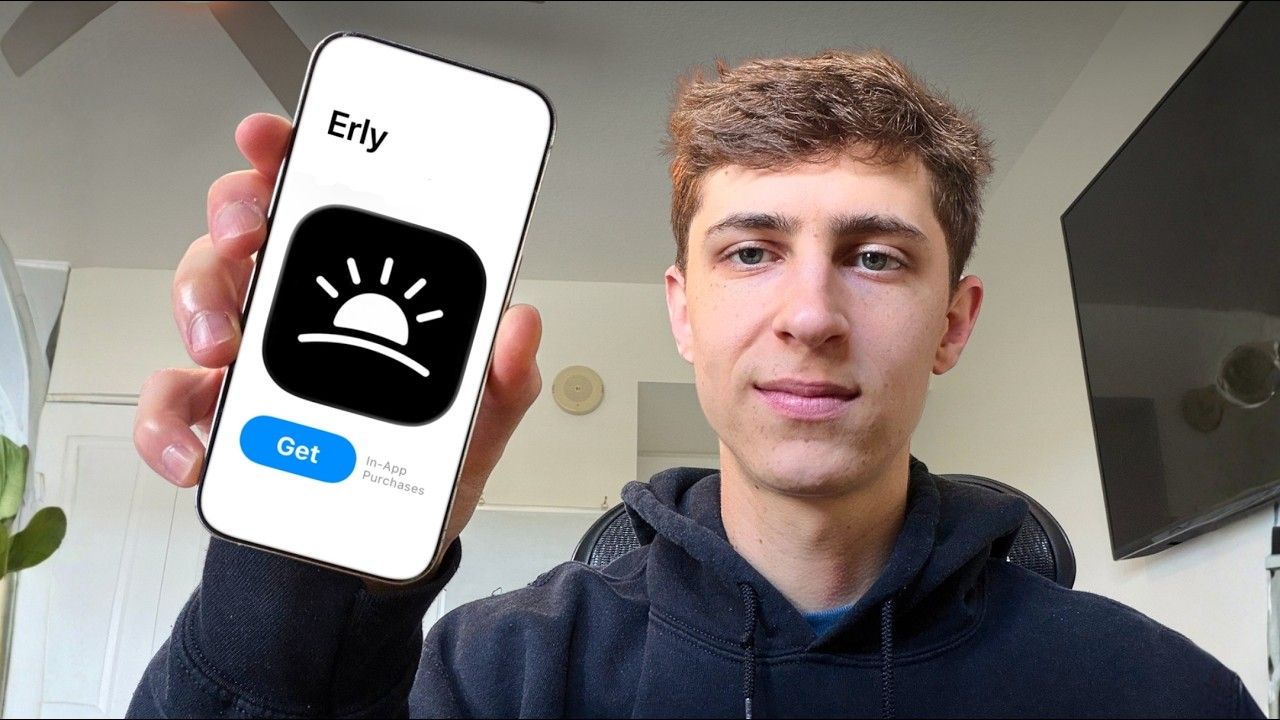
Jake Glacer turned a personal struggle with snoozing into Erly, a simple alarm app generating over $50k/month. Here's exactly how he did it.
Most successful apps don't start with a grand vision. They start with someone being genuinely annoyed at something and deciding to fix it. That's exactly how Jake Glacer — a 24-year-old self-taught developer with an accounting degree and a CPA — built Erly into a $50,000+ per month business in just four months.
Over 225,000 downloads. $61,200 in the last 28 days alone. And it's an alarm clock app.
Here's the full breakdown.
The Idea: Solve Your Own Pain
Jake had a simple, embarrassing problem: he couldn't stop hitting snooze. So he created a manual accountability system with a friend — he had to text a video of himself doing push-ups before 6 AM or face the consequences. It worked. And it was annoying enough that he thought, *there has to be a better way to automate this.*
That personal pain point became Erly. The core concept is dead simple: complete a physical task — the main marketing hook being push-ups — to turn off your alarm. No task, no silence. It's uncomfortable enough that you actually wake up.
This is the oldest startup advice in the book, and it still works. Build for a problem you personally hate. You understand the nuance, you know what "good" feels like, and you're not guessing at whether the pain is real. Jake wasn't building for a market segment — he was building for himself, then discovered millions of people had the same problem.
The Background: Not What You'd Expect
Jake didn't come out of a CS program or a FAANG internship. He studied accounting at the University of Florida, got both his Bachelor's and Master's degrees, earned his CPA, and spent a year at a Big Four accounting firm. He taught himself to code over the last four years, bouncing through failed business ventures before Erly.
He's refreshingly honest about those failures: *"I've been coding for the last four years or so, had some other businesses in the past, nothing really worked. Realized through all these failures that marketing is the most important thing."*
That sentence is doing a lot of work. Most developers — and Jake was no different early on — obsess over the product. Features, polish, architecture. The build becomes the thing. But Jake's prior failures burned that lesson out of him. By the time he started Erly, he'd already accepted that building was the easy part. Distribution was the hard part. So he flipped his priorities entirely.
The Timing: Apple's AlarmKit API Was the Unlock
Here's where luck meets preparation. Jake initially built an MVP in just three weeks — but it was an accountability app without any alarm functionality. Users had to remember to open it themselves. That's a fragile experience.
Then iOS 26 dropped the AlarmKit API. This new Apple API allowed third-party developers to integrate directly with the iPhone's native alarm system for the first time. Real alarm functionality. Reliable. Not the janky workarounds previous alarm apps had relied on.
Jake immediately recognized the opportunity. Every alarm app before this moment was, in his words, *"gimmicky and not reliable."* AlarmKit changed that. He pivoted, added the core alarm feature, and suddenly had a product that could actually compete at a fundamental level — not just as a novelty.
This is the timing advantage that people underestimate. New platform APIs create temporary windows where the playing field resets. Early movers who build quality products during these windows get organic visibility, App Store featuring consideration, and word-of-mouth from users who are surprised something finally works the way it should. Jake saw the window and moved fast.
The Timeline: 19 Days to Launch, $50k by Month Four
Jake's build-and-launch cadence was aggressive. Here's how it played out:
- Day 1: First code commit
- Day 19: App live on the App Store — no alarm feature yet, just the core accountability framework
- Day 38: Core alarm feature added (19 days after launch)
- Day 45: First influencer marketing video goes live — people start purchasing, idea validated
- Day 65: Hit first $1,000 in Monthly Recurring Revenue
- Days 90–120: App scales to $30,000–$50,000 MRR
Four months. Zero to fifty thousand dollars a month. The framework was explicit: *"Ship fast, validate the idea as fast as possible."* Jake knew he could build. What he didn't know was whether he could get views and market it effectively. So he got the product to a shippable state and started testing distribution immediately. The product could be improved in parallel — the marketing question needed an answer first.
The pricing model is clean: a 3-day free trial, then $9.99/month or $29.99/year. Low enough friction to convert, high enough to generate real revenue at scale. With 51,000 first-time downloads in a 28-day window, even a modest conversion rate produces serious numbers.
The Growth Engine: Influencer Marketing Over Everything
Jake didn't run paid ads. He didn't chase App Store optimization tricks. His primary distribution lever was influencer marketing, and he leaned into it hard.
The app's hook made this almost perfectly suited for video content. "Do push-ups to turn off your alarm" is inherently visual and demonstrable in under 30 seconds. It's shareable. It triggers either curiosity (*does that actually work?*) or recognition (*I need this*). That kind of visceral, simple value proposition is exactly what performs well in short-form video — and Jake knew it.
His first influencer video on day 45 was the validation moment. Once he saw purchases rolling in from that single piece of content, he knew the flywheel could spin. He doubled down from there.
For solo app developers, this lesson is almost counterintuitive. The instinct is to keep building, keep polishing, add one more feature before you push it out. Jake's entire arc argues against that. You should be spending the majority of your time on distribution. Finding the right creators. Crafting the right hook. Getting the product in front of eyeballs that are already primed to care about it.
What Makes Erly Actually Work
Beyond the business mechanics, there's something worth appreciating about why the app resonates. The snooze button is one of the most universally relatable failure modes humans have. Everyone knows they shouldn't do it. Almost everyone does it anyway. The alarm goes off, and your brain — still half-asleep — negotiates with itself and loses.
Erly introduces a physical commitment device. You can't turn off the alarm without doing push-ups. That's it. It's not a complex behavior change system. It's not a habit tracker with 47 metrics. It's one blunt intervention that makes the easy thing (staying in bed) harder than the hard thing (getting up). Behavioral design at its most minimal and effective.
And because it's tied to Apple's native alarm infrastructure via AlarmKit, it's actually reliable. It goes off when it's supposed to. That trustworthiness is what differentiates it from the graveyard of alarm apps that tried this concept before and failed on execution.
Takeaways
Jake's story compresses a lot of hard-won lessons into four months. A few things stand out:
- Personal pain points are underrated idea sources. If you have a problem and your manual workaround is working, there's probably an app there.
- Watch for new platform APIs. AlarmKit was a reset moment. These windows open and close. Being early matters.
- Ship before you're ready. The MVP had no alarm feature. He launched anyway and learned while building.
- Marketing before perfection. Jake explicitly deprioritized polish in favor of getting distribution answers quickly. The product could improve; the market question couldn't wait.
- Simple hooks win on social. "Do push-ups to turn off your alarm" is one sentence. It works in a TikTok, a tweet, or a conversation. Never underestimate how much distribution power lives in a clear, demonstrable concept.
Jake is 24. His accounting background has nothing to do with his success here — and everything to do with it. He learned discipline, he got comfortable with numbers, and then he channeled all of it into building something real. Sometimes the nonlinear path is the right one.
Original video
https://www.youtube.com/watch?v=uvIcGuN2iO8