 Story
StoryFrom $250K Software Engineer to $33K Cafe Owner — And Happier Than Ever
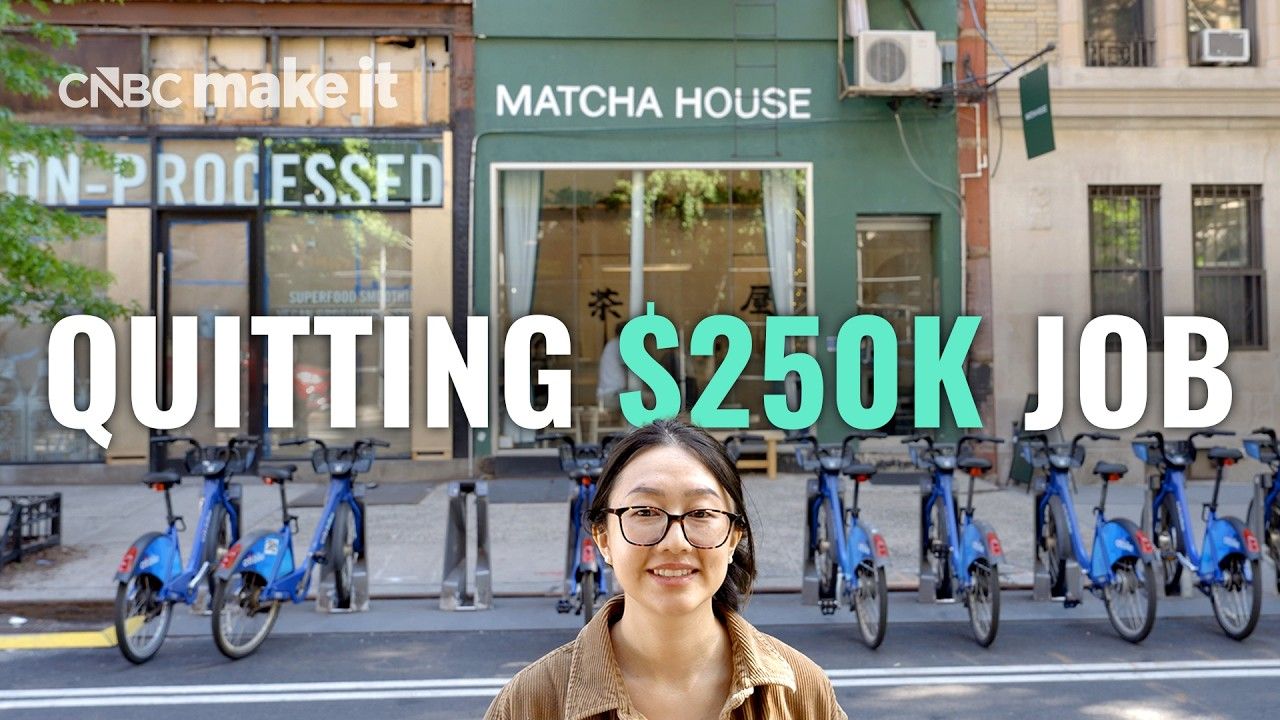
Michelle Yeung left a quarter-million-dollar tech career to open a matcha cafe in NYC. Her story is a powerful reminder that income and fulfillment aren't the same thing.
Michelle Yeung was 29 years old, pulling in $250,000 a year as a software engineer in New York City, and deeply unhappy. She had the salary, the freedom to travel, the ability to buy almost anything she wanted. And still, something was off.
So she walked away from all of it to open a matcha cafe.
Her words say it better than any summary could: *"I went from making $250,000 a year to now expecting around $33,000 this year, and I'm so much happier now than I was before."*
That's not a personal finance win by conventional metrics. But it might be one of the most honest stories about money, meaning, and the courage to blow up a perfectly good career in pursuit of something real.
Growing Up Hungry for Stability
Michelle grew up in San Francisco, raised by a single immigrant mother in a neighborhood near Chinatown. The family didn't have much. She shared a bed with her mother through her teenage years. Financial stress wasn't an abstraction — it was the texture of daily life.
That kind of upbringing tends to leave a mark. For Michelle and her siblings, the shared mission was simple and urgent: *get to a point where we don't have to worry about money again.* That goal became the compass.
So when her older brother told her that software engineering was the next big thing, she listened. She was good at math, studied applied math in college, and built her way into a tech career. Her first job offer came in at $160,000 a year — and she found out while sitting on the toilet. Life-changing, just like her brother promised.
The Problem With Getting What You Wanted
For a while, the money did what money is supposed to do. It removed anxiety. It opened doors. It felt like freedom.
But a few years into her software engineering career, the cracks started showing. Michelle realized she was showing up for the paycheck, not the work. The projects felt abstract, disconnected from anything tangible. She describes it bluntly as *"fake work"* — the kind where you lose sight of the purpose and just go through the motions.
When Michelle can't find meaning in what she's doing, she shuts down. Motivation evaporates. And that's exactly what happened. The salary kept climbing while the fulfillment kept dropping, until she finally accepted that no amount of compensation was going to fix the underlying problem. She needed a complete change.
The Matcha Idea That Wouldn't Go Away
The seed for Matcha House got planted somewhere around 2022–2023. Michelle had been making matcha at home for years — she knew the craft, cared about the quality, and had opinions about what a great cup actually tasted like. So when she started exploring matcha spots around New York City with friends, she was genuinely surprised. There weren't any great options. The stuff she was making at home was simply better than what the city had to offer.
That gap between what existed and what she knew was possible — that's where the business idea was born. New York needed a high-quality matcha cafe. She could build it.
She started running the numbers to check feasibility. The math was sobering but survivable. She decided to move forward.
The Preparation Phase Nobody Glamorizes
Here's where Michelle's story gets genuinely impressive. She didn't quit her job and wing it. She saved $200,000 in cash before she made any moves — two hundred thousand dollars set aside specifically to fund the build-out and early operations of the business.
While still working full-time as a software engineer, she picked up a second job at Starbucks. Shifts ran from 4:30 AM to 10:00 AM. It was physically demanding in a way that sitting at a computer never was, and she loved it. The hands-on nature of cafe work felt alive in a way her tech job hadn't in years.
She also flew to Japan for research. Not a vacation with a few cafe visits sprinkled in — a structured, intentional deep dive into matcha culture, sourcing, and preparation. She set up what she calls *"little tasks"* and *"little training"* for herself, building real expertise before she ever unlocked a storefront. By the time she was ready to open, she was the only person she trusted to whisk every single drink. For the first two months, every cup that went out was made by her hands.
That level of obsession isn't just passion. It's a standard. And it set the tone for everything Matcha House would become.
When Everything Goes Wrong at Once
The launch of Matcha House was, to put it charitably, a disaster in slow motion.
First, she couldn't get a lease. Landlords didn't want to take a chance on a first-time small business owner with no track record in food service. That's a wall a lot of aspiring cafe owners hit and never get past. She pushed through it.
Then came the contractors. Work was left unfinished. Some of her counters weren't completed properly. The aesthetic she had envisioned was compromised before the doors even opened.
And then — the night before the soft opening — the cafe flooded. Both the basement and the upstairs, simultaneously.
At that point, most people would have taken it as a sign. Michelle called her friends instead. They showed up. They helped her get the place ready. And on opening day, those same friends lined up down the block.
That detail matters. The business didn't launch on marketing or press coverage. It launched on community — real people who believed in her enough to show up physically, on a chaotic day, and help it happen.
What Success Looks Like Now
Today, Michelle's life looks almost nothing like her old one. She's not maximizing income. She's not chasing a promotion or negotiating her next offer. She works long hours — *"all hours I'm awake,"* as she describes it — but the exhaustion hits differently when the work means something.
She's trained her staff well enough that Matcha House can run without her physically behind the counter, which has freed her up to handle the administrative side of the business. She's building something. She can see it. She can touch it. She can watch customers walk in, try the matcha, and come back.
The $33,000 she expects to make this year is a fraction of what she earned in tech. By every standard financial metric, it looks like a step backward. But Michelle isn't measuring by those metrics anymore. She's measuring by whether the work feels real, whether she's building something she's proud of, whether the people in her community are better off for having Matcha House exist.
She is. She is. And they are.
The Part Worth Sitting With
There's an easy version of this story where Michelle's choice is framed as brave but impractical — a luxury available only to someone who already banked a quarter million in savings from a high-paying career. And that's fair. The financial runway she built is part of what made the leap survivable.
But the deeper point isn't about the money. It's about the willingness to honestly evaluate your own life, admit that what you thought you wanted isn't working, and do something about it before another decade slips by.
Most people know that feeling — the slow drain of doing work that feels disconnected, purposeless, fake. Most people keep cashing the checks anyway, telling themselves the discomfort will pass or the money will eventually feel like enough.
Michelle just decided it wouldn't. And she was right.
That's the story worth paying attention to.
Original video
https://www.youtube.com/watch?v=xQY8m1a86is