 Story
Story$30k/Month From a Remote Island With 191 People
Milly Tamati built a thriving business from a Scottish island most people have never heard of — and her biggest KPI isn't revenue. It's calmness.
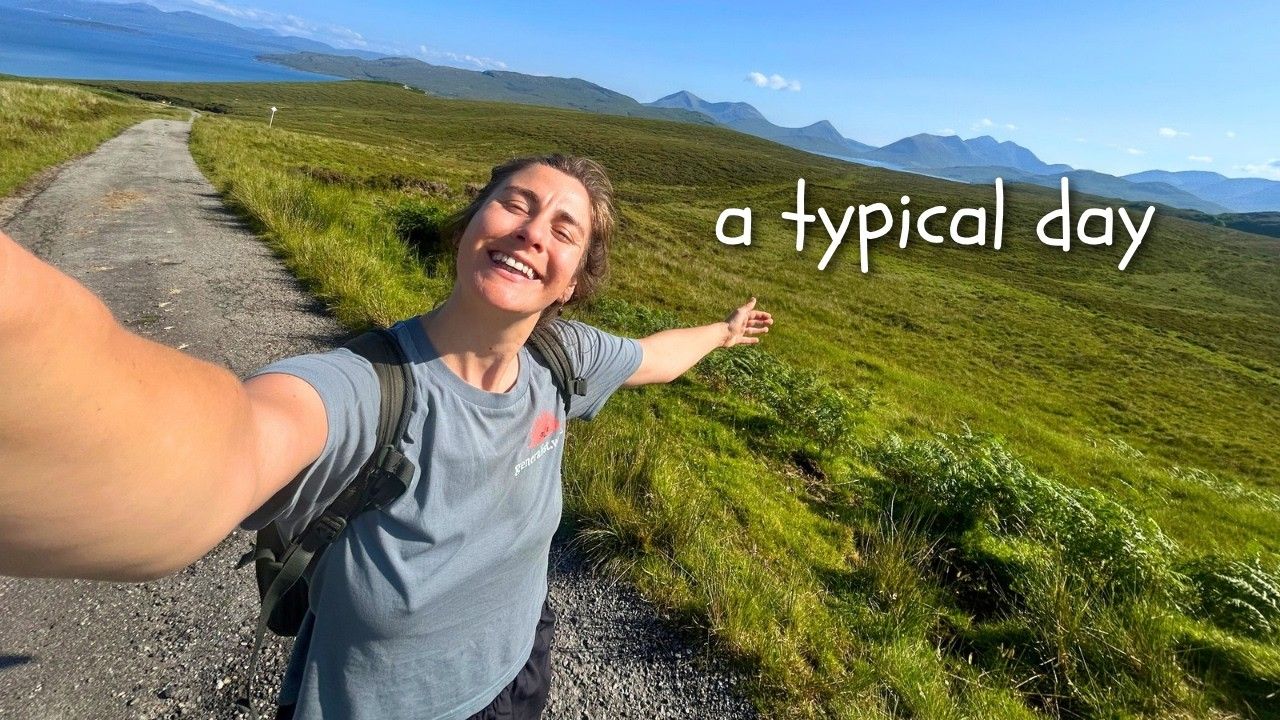
Most founders obsess over ARR milestones, headcount, and hypergrowth. Milly Tamati obsesses over something else entirely: being calm and content with what she has. That's her number one KPI. And somehow, running her business from a 200-year-old Highland cottage on a Scottish island with a population of 191, she's built Generalist World into a $30,000/month business with nearly $600,000 in cumulative revenue over four years.
It's a story that quietly challenges almost everything we're told a successful startup should look like.
Step 1: Redefine What Success Means to You
Before anything else, Milly makes a point of calling out the arbitrariness of the metrics most founders chase. The $1M ARR milestone? She calls it an "arbitrary number." Not because revenue doesn't matter — it clearly does — but because chasing someone else's definition of success is a trap. She built a profitable business that makes a few hundred thousand a year with a small team, and that's exactly what she wanted. It fits the lifestyle she designed. No more, no less.
The mindset shift: Stop asking "how big can this get?" and start asking "what does the life I actually want look like, and can this business support it?"
Why it matters: When your metrics are rooted in your own values, you stop feeling behind. You stop grinding for a finish line that keeps moving. Milly's calm isn't accidental — it's the direct result of building a business optimized for her life, not for an investor pitch.
Step 2: Build a Morning That Grounds You
Milly's morning routine is one of the most intentional parts of her entire operation. It starts the moment she wakes up — not with Slack, not with emails, not with a phone. She goes straight outside for a morning walk.
The walk: Her only goal on this walk is to "notice something that I didn't notice the day before." That's it. It's a practice in attention and appreciation, a way of reminding herself how vast and interesting the world is before she sits down to do anything productive.
Meditation: After the walk, she settles into a cozy corner of her living room to meditate. This isn't a productivity hack. It's a genuine reset before the workday begins.
Creative work first: Instead of reacting to other people's demands — the pings, the inboxes, the requests — she spends the rest of her morning on creative tasks and content creation. This is the work that requires the most mental energy, and she protects that energy fiercely by doing it first, before anything or anyone else can erode it.
The philosophy here is simple but radical: approach your work from a grounded state, not an anxious one. The slow morning isn't laziness. It's the foundation everything else is built on.
Step 3: Structure Your Workday Into Blocks
Milly's workday has a clear shape to it, and that shape is non-negotiable.
- Mornings are for creative work — writing, content, building. This is when her energy and focus are highest.
- Lunch includes a 40-minute walk she calls "the loop," described as her favorite walk in the entire world. It's a real break. Not a working lunch. Not a podcast-while-walking situation. A genuine pause.
- Afternoons shift to meetings, podcasts, and partnership work — things that require her to be present and engaged with other people, but don't demand the same deep creative energy.
- End time: Around 3 PM, she closes down. Her rule is clear: "when I'm at work, I'm on, but when I'm off, I'm out."
That last line is worth sitting with. Full presence in both directions — fully engaged when working, fully disconnected when not. No half-measures. It's what makes the work sustainable and the rest actually restful.
Step 4: Fall in Love With a Problem, Not an Idea
This is where Milly's business advice gets genuinely useful for anyone at the beginning of their journey. She's skeptical of the standard "find a business idea and build it" framework. Instead, her approach is: "Don't fall in love with an idea, fall in love with a really big, juicy problem."
For her, the problem is that generalists — people who have broad interests, who don't fit neatly into one specialization — are consistently misunderstood, undervalued, and made to feel like there's something wrong with them. She saw it in online forums, in hiring discussions, in the way the career world was structured. People were scared to call themselves generalists. They felt they had to apologize for it.
That problem felt enormous to her. And that's exactly the point. A problem big enough that you'll never fully solve it gives you endless motivation. There are tens of millions of generalists in the world. Milly will never run out of people to help, stories to tell, or work to do. The business will never feel finished in a way that makes her want to walk away. That's a feature, not a bug.
Why this approach works: When you're attached to an idea, you pivot the moment it gets hard or stops being fun. When you're attached to a problem, the individual solutions can change and evolve, but the mission stays alive.
Step 5: Build an Ecosystem, Not Just a Product
Generalist World isn't a SaaS. It isn't an agency. Milly describes it as a complete "world" for people who don't fit into a single box — and that description is literal.
The business includes:
- A newsletter reaching a wide audience of generalists globally
- A members' community for deeper connection and support
- A job board specifically for "roles too weird to post anywhere else" — a genuinely clever positioning that speaks directly to the community's identity
- A summer school for skills and development
- International Generalist Day, an actual holiday Milly created to celebrate her community
Each of these components reinforces the others. The newsletter feeds the community. The community validates the job board. The job board attracts employers who couldn't find the right people elsewhere. International Generalist Day is a bold, memorable branding move that no competitor can copy because they didn't create it first. It all adds up to something that feels more like a movement than a company — which is probably why it's worked.
Step 6: Lean Into Being Weird
Milly's final piece of advice is the one that might be hardest to act on, but it's probably the most important: give yourself permission, and be more weird.
As the internet becomes more homogenized — more algorithm-optimized, more safe, more vanilla — genuine weirdness stands out. The things that make you different, the interests that don't fit together neatly, the life choices that seem unconventional — those are actually your moat. Milly moved to a remote Scottish island with 191 people. She built a business around a career identity that people were embarrassed to claim. She made up a holiday.
Her reflection: "The more weird I became, the more success that started coming my way."
She also lives what she preaches in the most literal way. Stepping outside her 200-year-old Highland stone cottage — no central heating, wood stoves, no restaurants, no Uber Eats — she's more likely to encounter sea eagles and otters than another human being. She cooks every meal from scratch, often with ingredients foraged or sourced from the island itself. Her online world gives her a global reach with hundreds of thousands of followers. Her real world gives her sea swims and silence. She calls it a "double life" and makes no apologies for it.
Takeaways
Milly's story isn't really about Scotland or even about generalists. It's about something most of us know but rarely act on: you are allowed to design a business around the life you want, not the other way around.
- Define your own success metrics before someone else's definition becomes your default
- Protect your mornings and your creative energy like the finite resources they are
- Find a problem so big and so meaningful that you'll never run out of reasons to work on it
- Build a world around your community, not just a product for your customers
- Stop waiting for permission — from investors, from the market, from anyone — and give it to yourself
The $30k/month is real. But the calm, intentional life built around it? That's the actual achievement.
Original video
https://www.youtube.com/watch?v=ICTRNFIdZvc